J. P. Morgan Quotes
Gold is money. Everything else is credit.


At the time, a bank note—paper money issued be a private bank—was not backed by any gold or silver and was not insured bym the government. A bank could print as much as they wanted, so it was always worth less as the further you were from the particular issuing bank, the less you could get your bank note, because no one knew whether or not the issuing bank would redeem the note or even be in existence. So every private bank note had diminished value for the public. However, carrying gold and silver around and making change for precious metals was difficult and often impractical. So people used banknotes. The same thing happens with credit cards today. The merchant has to pay a fee to the credit card company and the bank and therefore charges us more for whatever we buy. But most consumers and merchants are willing to pay the difference to obtain the convenience of the credit card,


The very act of printing money created a debt—at the time and until the Nixon Administration which went off the gold standard—the government owed the gold or silver and the spicie—the printed money—was a promissory note.

Economists they world over have differed as to how critical it was to have a money supply that is based on a gold standard or other precious metal. United States history has had a dispute over whether the money should be backed by gold or silver. Finally, under the Richard M. Nixon administration, the United States went off the gold standard and American money ever since is only backed by the ‘full faith and credit’ of the United States. Some politicians like Paul believe this is a poor policy since it allows governments to control their own money supply irrespective of their gold or silver holdings. Paul goes further than most and sees freedom itself dependent on a precious metal standard. Most politicians disagree.


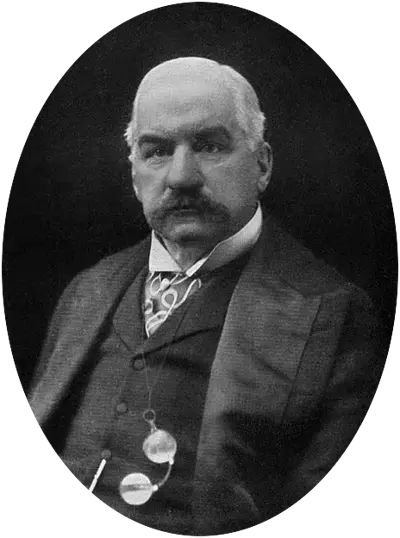
John Pierpont Morgan was an American financier and banker who dominated corporate finance on Wall Street throughout the Gilded Age. As the head of the banking firm that ultimately became known as J.P. Morgan and Co., he was a driving force behind the wave of industrial consolidation in the United States spanning the late 19th and early 20th centuries.
