Alfred Marshall Quotes
Civilized countries generally adopt gold or silver or both as money.
Marshall, Alfred, and Mary Paley Marshall. The Economics of Industry. Macmillan and Co., 1879, p. 149.

There has always been a fear of inflation and currency debasement by governments. Since ancient times, rulers issued coins and when they were made of cheap metals like copper or iron, the ruler could mint as much as he wanted and when he did so the value went down. By using only precious metals, gold and silver, for coins, there would be a natural restraint on government. Garfield was one of those who believed that we should always have money of gold and silver. The United States would use that principle for the next century even backing its paper money with gold and silver. In the Nixon administration the United States abandoned the gold standard. Today, it is the ability of a country to produce things that maintains value of paper money which has been supplanted in many cases by electronic money.


Economists they world over have differed as to how critical it was to have a money supply that is based on a gold standard or other precious metal. United States history has had a dispute over whether the money should be backed by gold or silver. Finally, under the Richard M. Nixon administration, the United States went off the gold standard and American money ever since is only backed by the ‘full faith and credit’ of the United States. Some politicians like Paul believe this is a poor policy since it allows governments to control their own money supply irrespective of their gold or silver holdings. Paul goes further than most and sees freedom itself dependent on a precious metal standard. Most politicians disagree.

The same argument can be made against the modern paper money supply. What Jefferson and most of the founding fathers, with the exception of Alexander Hamilton. did not realize was that the major stability of any kind of money was not only the silver or gold that backed it but the political and legal stability of the nation and the size of its productive economy. Where Jefferson was right however is that all these banknotes at the time were issued by local private banks. The Government had no responsibility for paper money and had no knowledge of how much paper money any bank issues and whether or not they had any silver to back it up. Banks didn’t trust other bank’s notes and would only redeem them at a discount. A $10 note from a South Carolina bank might only be worth $7 in New York and $6 in Boston. The early American monetary system was a mess.


What Franklin Delano Roosevelt began, President Nixon would in 1971 complete by removing America from the gold standard entirely and ending fixed rates of exchange. There have been those in government who did not understand the modern economics of money and who believed that currency had to have a fixed rate of exchange for gold or silver otherwise it was worthless. Roosevelt had to deal with them as did Nixon later. Even into the 21st century when it had been amply demonstrated that the best currency in the world was the United States dollar precisely because it was backed up by the full faith and credit of the United States Government, there were those who complain that United States money is not sound currency and argue for the return of the gold standard.


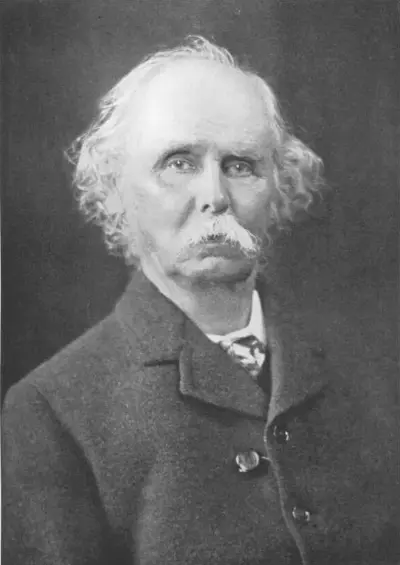
Alfred Marshall FBA was an English economist, who was one of the most influential economists of his time. His book, Principles of Economics (1890), was the dominant economic textbook in England for many years. It brings the ideas of supply and demand, marginal utility, and costs of production into a coherent whole. He is known as one of the founders of neoclassical economics.
