Alan Greenspan Quotes
If all currencies are moving up or down together, the question is: relative to what? Gold is the canary in the coal mine. It signals problems with respect to currency markets. Central banks should pay attention to it.
Greenspan, Alan. Interview with Council on Foreign Relations, 2010.


This was a very astute prediction. At the time, the United States gold mining production was second only to South Africa and American currency was based on the gold standard which seemed to all to be permanent. Half a century later, the U. S went off the gold standard.

Most modern economists argue just the opposite. The monetary supply for a growing world population would be insufficient for growth since the supply of gold is extremely limited. The United States was plagued by this problem from its earliest times as its growth was very strong, but there was not enough gold to support the growth. So silver was added, and then during the Civil War where growth rates were very large in the North, paper currency evaded the problem, which returned over the next century until the Nixon Administration—a very conservative one—shocked many conservatives by abandoning the Gold Standard and the U. S. has never returned to it.


There were more silver mines than gold and the owners and others who wanted to increase the money supply had advocated using silver as well as gold to back the money supply. As silver was more plentiful, financiers felt that the American money had been diluted and other its value went down. Cleveland proposed that the legislation allowing so much silver be repealed. It was. Note the appeal to international opinion. At the time the United States was not one of the world’s superpowers and what the English and French thought about our money was extremely important and likely to persuade voters. A century later, American public opinion was not as influenced by that of other nations.


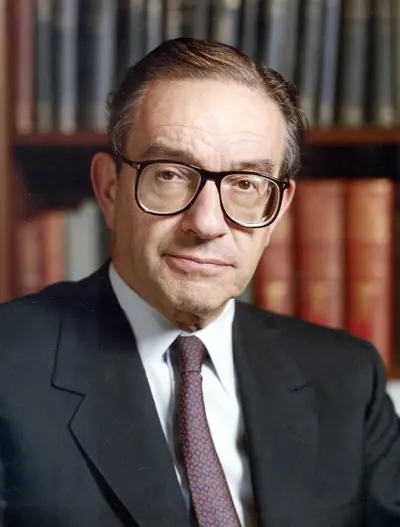
Alan Greenspan is an American economist who served five terms as the 13th Chair of the Federal Reserve of the United States from 1987 to 2006. He works as a private adviser and provides consulting for firms through his company, Greenspan Associates LLC. First appointed Federal Reserve chairman by President Ronald Reagan in August 1987, he was reappointed at successive four-year intervals until retiring on January 31, 2006, after the second-longest tenure in the position (behind William McChesney Martin).
