Martin Feldstein Quotes
Banks and other financial institutions found that it was often impossible to obtain market prices for mortgage-backed securities and other risky assets. Not knowing the value of their own portfolios, they could not judge the solvency and liquidity of other financial institutions either. As a result, they were unwilling to lend to them, and the financial system ground to a halt.
Martin Feldstein, "The Fed's Unconventional Monetary Policy: Why Danger Lies Ahead", Foreign Affairs, May/June, 2016
Sourced by: Eigen's Political and Historical Quotations

"Market mispricing" is an economic euphanism for the bankers and major investors of the nation (and abroad) bidding up the prices of the assets in order to continue to squeeze large profits even after they knew that the assets had been far overpriced. Few wanted to stop playing hoping the music would not stop in the economic game of musical chairs. When it did, there were not enough "seats" and failures casued other failures and the contagion spread.


Sovereign credit substitution is where the government, one way or another, assumes and guarantees the debts of private corporations. This is an elegant way of saying: “taxpayer bailouts”


U. S. Treasury Secretary Larry Summers called Rajan a “Luddite” for this view, but what Rajan observed and predicted was exactly what happened in the Meltdown of 2008 which led to the Great Recession. Rajan was one of the few economists to call this right. Several, invested their own money assuming a crash and made billions. Most, like Summers and the Federal Reserve Chairmen in retrospect admitted that they missed the signs and didn’t connect the dots. See {637168}, {637987}, and {620038}

Born thought that her agency was responsible for regulating the new esoteric financial products—derivatives including credit default swaps—for otherwise there would be no regulation at all of financial products that could dwarf the stock and bond market. Summers persuaded her to back off. When the Meltdown of 2008 hit, the huge derivative exposure of the large banks and some insurance companies was so great that it was one of the major causes for the meltdown of the entire banking system. Summers, normally a great economist not only called this one wrong, but later, along with most other government and private economists ignored a very explicit warning—See {637168}, {637986}, and {620038}.

The savings and loan crises became clear shortly thereafter.

High level financial industry executives were earnings millions of dollars even if the company did poorly. In many cases annual bonuses were paid even after the firm lost money and in some cases after the firm had to be sold to stave off bankruptcy. The worst thing in 2009 and 2010 was when some of the banks paid million dollar and more bonuses while the company was getting bailout money from the taxpayers to prevent their bankruptcy.

The Meltdown of 2008 came a year later and Citigroup, one of the largest banks in America, had massive liquidity problems and in order to stave off bankruptcy the taxpayers had to come up with $45 Billion. The bank executives, as this quotation demonstrates, knew that they were in a very risky situation and that if the subprime mortgages started to default, the “music would stop” and they and the other banks would have a massive liquidity problem. None the less, they kept on investing more and more of their bank customer’s money and making money in what they knew was a highly risky enterprise. The greed clouded their judgment and when the music stopped and many were no longer dancing, the Meltdown of 2008 almost destroyed the entire national economy and triggered the Great Recession where the overwhelming proportion of Americans had to suffer for the greed of those who could not “stop dancing” even as they knew it was very dangerous.

Geithner, the Treasury Secretary immediately after the Meltdown of 2008, facing complete collapse of our financial system, among other ameliorations, advocated and implemented many subsidies to bail out the banks most of whom had been greedy, foolish and often dishonest. He even allowed banks to use taxpayer money to pay bonuses to Bank executives who had brought the bank to ruin being a cause of the crisis. However, the banks not only survived but recovered and made huge profits while many of the taxpayers whose funds were used to help the banks were still struggling to make ends meet and it was they who received little, if any, government assistant.

He was replying to Senator Grassley--{637990}. This quotation is one of the saddest admissions in American law enforcement and corporate regulatory history. A small group of very wealthy men, working for huge financial corporations caused the worst financial crisis since the Great Depression. The Government regulators were reined in by the Bush Presidential administration and were none to competent anyway. The Clinton Administration repealed the Glass Stiegel Act allowing banks to gamble with customer’s The Congress made matters worse by kowtowing to the housing and real estate special interests and overheating the housing market. But with all that some of the many of the financial executives committed crimes ranging from financial fraud to forgery of court documents. But they had put the country into such a poor economic state, that the Obama administration feared that prosecution of some of the leading financial executive criminals would spook the financial markets and cause an even greater economic situation. At least the Attorney General admitted the truth of Senator Grassley’s suspicion--{637990}.
At this time it was 6 years after the Home Financing Crisis and the Meltdown of 2008 and despite tens of thousands of law violations by the bank, the Justice Department was finally finishing their investigations and requiring some penalties. Other negotiations with other banks were in progress, but no bank executives were going to jail for the millions they handled fraudulently, whereas a burglar who stole household goods would do jail time.

When the Meltdown hit America, the crisis drew attention to the fiscal solvency and stability of banks in most of the world. The Irish banks were much more overextended than those of most counties and when that came to light there was a bank panic in Ireland. Ahern and the Irish Dail (parliament) decided to bail out the Irish bank at a very great cost to the rest of the Irish economy and people. He believed if Lehman Brothers had been bailed out, as America did with other institutions, the Irish bank bubble would not have burst. It is not known whether he actually meant to use the word “testicles” or he made a gaff intending to use the word “tentacles”. Both have relevant meaning in the situation with a significant shade of difference in meaning between the two.


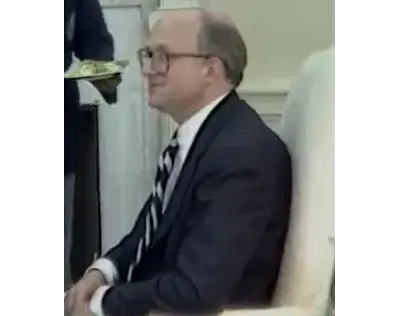
Martin Stuart Feldstein was an American economist. He was the George F. Baker Professor of Economics at Harvard University, and the president emeritus of the National Bureau of Economic Research (NBER). He served as President and Chief Executive Officer of the NBER from 1978 through 2008 (with the exception of 1982 to 1984). From 1982 to 1984, Feldstein served as chairman of the Council of Economic Advisers and as chief economic advisor to President Ronald Reagan (where his deficit hawk views clashed with Reagan administration large military expenditure policies). He was also a member of the Washington-based financial advisory body the Group of Thirty from 2003.
