Conrad Black Quotes
At the end of Friday, March 3, 1933, thirty-two states had closed all their banks ... Six other states had closed almost all their banks. In the other ten states and in the District of Columbia withdrawals were limited to 5 percent of deposits and in Texas to ten dollars per day. The U.S. financial system had reached the last extremity before it would collapse completely, taking the life's savings of tens of millions of people and what was left of the international economic system with it.
Conrad Black, Canadian Historian, Biographer & Newspaper Publisher, Description of the American Banking System the day before Franklin D. Roosevelt assumed the Presidency in the Great Depression, Franklin D. Roosevelt: Champion of Freedom, 2003
Sourced by: Eigen's Political and Historical Quotations

Sovereign credit substitution is where the government, one way or another, assumes and guarantees the debts of private corporations. This is an elegant way of saying: “taxpayer bailouts”


The President had a series of radio talks to the people in which he addressed them directly and explained things as he then understood them.


This quotation amazes many people who believe that Hoover caused the Great Depression and that Roosevelt and the Democrats accused him of this. Actually, as Mrs. Roosevelt says here, the causes were the policies of the Republicans who preceded Hoover. Hoover was actually to blame for not doing much about the Depression. He believed philosophically that the Government should not “intervene” in the market place and that government assistance to individuals would damage their character. Most Americans saw this as uncaring and callous.


Essentially Mellon told the President to let the entire economy crash. With huge numbers of people out of work, labor would be more humble and not only settle for lower wages, but will work harder, and without "excess" income beyond their basic needs, they would not drink and engage in other immoral activities. President Hoover, a wealthy man himself, did not go along with Mellon's idea of making the situation worse, but his conservative philosophy of government would not allow the Government to "interfere" with the private economy or give any direct assistance to the citizens.

He was one of the very few people who warned about the market crash of 1929 and the Great Depression.


Hoovervilles were camps of people who lived in city parks or empty land. Tar paper shacks sheltered some—others lived in boxes. People had no work and no prospects of work; they had no money for rent; they just lived a meager existence as best they could under conditions that today exist only in the third world. They were named Hoovervilles for the President at the time whose ineptness and philosophy simply let things deteriorate. Republicans were critical of many of Roosevelt’s economic policies, but the president would periodically remind them and the nation of what the situation was when the Republicans last ran the country.


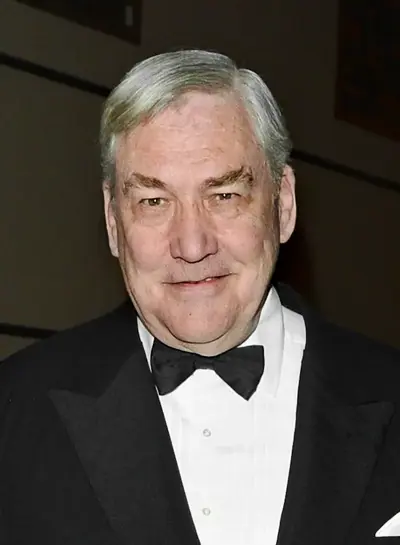
Conrad Moffat Black, Baron Black of Crossharbour, KCSG, is a Canadian-born British former newspaper publisher, convicted criminal, and writer. His father was businessman George Montegu Black II, who had significant holdings in Canadian manufacturing, retail and media businesses through part-ownership of the holding company Ravelston Corporation. In 1978, two years after their father's death, Conrad and his older brother Montegu took majority control of Ravelston. Over the next seven years, Conrad Black sold off most of their non-media holdings in order to focus on newspaper publishing. Black controlled Hollinger International, once the world's third-largest English-language newspaper empire, which published The Daily Telegraph (UK), Chicago Sun-Times (U.S.), The Jerusalem Post (Israel), National Post (Canada), and hundreds of community newspapers in North America, before controversy erupted over the sale of some of the company's assets.
