George Fox Quotes
At Flushing [Long Island] as soon as the meeting was done, there stood up a priest's son and laid down three things that he would dispute, the first was the ordination of ministers, the second women's speaking, and the third that we held a new way of worship….I said it was like Christ's way of worship which he set up above 1,600 years ago, and was a new way of worship to him and his priests…as for women's speaking, such as the apostles did own I owned
George Fox, 1624-1691, English founder of the Society of Friends (Quakers), Description of his trip to America and the reaction of non-Quakers, Journal, 1672
Sourced by: Eigen's Political and Historical Quotations

The issue as to whether clerics should be paid for their services, or teaching or given control of property or other power has split most religions including Muslims and Jews as well as various Christian sects. In the case of the Quakers, their philosophy came out against the pecuniary and material interests of the established churches, thus building a theological opposition. See {611968}


The clergy of the colonies were split on the American Revolution, but those clergy who supported the revolution made a huge contribution to the individual American’s intellectual view of the legitimacy of Parliament’s making laws governing the American Colonies. The anti-British clerics called for action while other forces of colonial America urged caution.


Early Christianity had a wide diversity of sect and opinion.


In 1980 Pope John Paul II issued a general order prohibiting priests from holding civil political positions. Many wondered whether Drinan, a marvelous and popular Congressman, would obey and leave Congress. He announced he was not going to seek election and his colleague immediately after his announcement asked him to share his thinking. This was his response.

In one of the earliest claims that women should be allowed to preach, she made a theological argument and then challenged the male theologians to better her arguments. Although she was very demur, intellectually and theologically she “took it right at them.” Such intellectual aggression by women was virtually unheard of.

New York State was so concerned about the separation of church and state that they would not allow any religious cleric or official, to serve in any position of the state militia or government. Delaware had earlier placed the same prohibition against clerics serving in any branch of the government. See {621428} The Bill of Rights did not go that far, but there are a few religions that also support this notion. Perhaps the most dramatic example was Pope John Paul’s prohibition of Priests running for elective office.


Priests at the time were mostly uneducated. They would tend to make up their own Biblical stories that the people would prefer rather than the official church versions. The bishops wanted this practice stopped.

Anne Hutchinson was tried by the Puritan religious and civil court for heresy. She started with Bible Study classes in her home and drew a substantial following. The clergy at the time were threatened and outraged. It was one thing for a woman to teach Bible Study to other women, but to also have men with the women was too much. The decision of the court was that she was banished from the colony. See {584753}.

Kennedy was being hurt be fears that as a Catholic, he would be beholden to the Pope and the Catholic Bishops. There were many protestants who believed that the Catholic Church was antithetical to democracy and some who even believed that Catholicism was the religion of Satan. Kennedy decided to confront the issue head on.

Some of the founding fathers were deeply religious men while others were not so. Some varied in their believes at different times of their lives, and a number were not very favorable towards orthodox religion. At the time, Roman Catholic and Protestant churches were persecuting other religions throughout Europe and people were still being killed for their heretical beliefs. Most important to some of them, kings and other monarchs whom they abhorred, all at the time claimed the Divine Right of Kings and the established churches were the most important support for monarchs. At the time most organized religions were opposed to freedom of conscience and certainly opponents of separation of church and state. American churches tended to take on American values but were never given the chance to dominate the American government they way many had in Europe and the rest of the world.

His positions presaged some of those of Protestants in the Reformation. In the great struggle of the time between the Pope and the Emperor, Marsilius was the leading advocate for the emperor’s superiority of authority. The Pope wrote a condemnation of these ideas.


The struggle in the Catholic Church reached an amazing state. Just after a new pope, Martin V, had been elected the Council of Bishops at Constance came up with this notion which placed their views above those of the Pope under the theory that this particular council derived its power and authority directly from Christ while the pope was only God’s “vicar on earth.” The struggle was somewhat akin to the inevitable struggle for power between an executive branch and a legislative branch. The Council’s ascendancy didn’t last very long and was repudiated by successive popes.

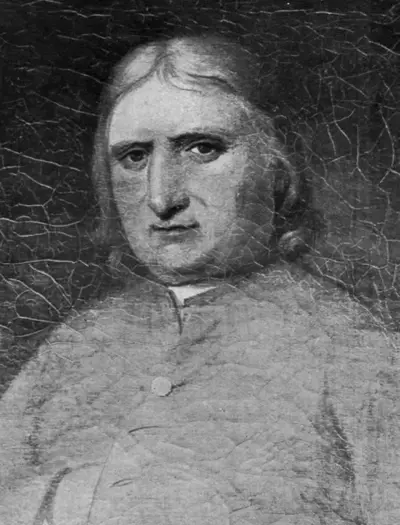
George Fox was an English Dissenter, who was a founder of the Religious Society of Friends, commonly known as the Quakers or Friends. The son of a Leicestershire weaver, he lived in times of social upheaval and war. He rebelled against the religious and political authorities by proposing an unusual, uncompromising approach to the Christian faith. He travelled throughout Britain as a dissenting preacher, performing hundreds of healings, and often being persecuted by the disapproving authorities. In 1669, he married Margaret Fell, widow of a wealthy supporter, Thomas Fell; she was a leading Friend. His ministry expanded and he made tours of North America and the Low Countries. He was arrested and jailed numerous times for his beliefs. He spent his final decade working in London to organise the expanding Quaker movement. Despite disdain from some Anglicans and Puritans, he was viewed with respect by the Quaker convert William Penn and the Lord Protector, Oliver Cromwell.
