George Fox Quotes
The prophets, Christ, and the apostles declared freely [did not get paid], and against them that did not declare freely; such as preached for filthy lucre, and divined for money, and preached for hire, and were covetous and greedy, that could never have enough; and that they that have the same spirit that Christ, and the prophets, and the apostles had, could not but declare against all such now, as they did then.
The issue as to whether clerics should be paid for their services, or teaching or given control of property or other power has split most religions including Muslims and Jews as well as various Christian sects. In the case of the Quakers, their philosophy came out against the pecuniary and material interests of the established churches, thus building a theological opposition. See {611968}
George Fox, 1624-1691, English founder of the Society of Friends (Quakers), Great Events in London, 1653-1654, Autobiography
Sourced by: Eigen's Political and Historical Quotations

See {611241}, {611246}, {611442}. While the issues with Cromwell were essentially political, there were substantial theological and cultural issues between the Quakers and other protestant sects which even extended across to the New World. See {612011}

Jewish males were obligated to learn the Torah as well as teach it. However, the issue of payment was then and still is controversial. Although Maimonides was the lead Cairo Rabbi, he took no fees or other benefits for his spiritual activities. He made his living as a Physician. The same debate ranged through Muslim and Christian sects. It was one of the issues that pitted the Quakers against some other Christian sects. See {611246}


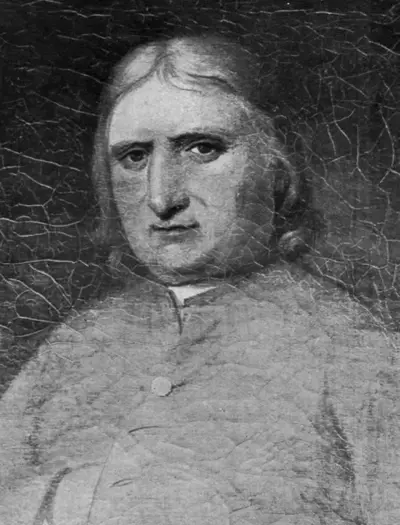
George Fox was an English Dissenter, who was a founder of the Religious Society of Friends, commonly known as the Quakers or Friends. The son of a Leicestershire weaver, he lived in times of social upheaval and war. He rebelled against the religious and political authorities by proposing an unusual, uncompromising approach to the Christian faith. He travelled throughout Britain as a dissenting preacher, performing hundreds of healings, and often being persecuted by the disapproving authorities. In 1669, he married Margaret Fell, widow of a wealthy supporter, Thomas Fell; she was a leading Friend. His ministry expanded and he made tours of North America and the Low Countries. He was arrested and jailed numerous times for his beliefs. He spent his final decade working in London to organise the expanding Quaker movement. Despite disdain from some Anglicans and Puritans, he was viewed with respect by the Quaker convert William Penn and the Lord Protector, Oliver Cromwell.
