Continental Congress Quotes
As the important contest, into which we have been driven, is now become interesting to every European state, and particularly affects the members of the British Empire, we think it our duty to address you on the subject. We are desirous, as is natural to injured innocence, of possessing the good opinion of the virtuous and humane. We are peculiarly desirous of furnishing you with a true state of our motives and objects; the better to enable you to judge of our conduct with accuracy, and determine the merits of the controversy with impartiality and precision.
The Continental Congress attempted to explain its actions to any and all who had their own problems with England.
Continental Congress, Address to the People of Ireland, July 28, 1775
Sourced by: Eigen's Political and Historical Quotations

Les Américains ont échappé à l'Angleterre.

He later settled for Home Rule in the Irish Treaty of 1922


For his seditious activities he was sentenced to penal servitude for life. He escaped and came to America where he entered politics


The treaty ending the Revolutionary war guaranteed that the English bankers and merchants who had debts going back to before the American Revo
lution would have “no impediment” in collecting their debts in America. However, Rhode Island and Virginia in particular placed many impediments and made it virtually impossible for debts to be collected in their states. The John Jay led Supreme Court, in particular, overturned state actions on the grounds that they had implemented Patrick Henry’s sentiment and hence violated the treaty.

Americans were by no means united in wanting to take up arms against Britain. Relatively few of the loyalist quotations have come down to us, but here is one. It also illustrates why some Americans wanted complete independence: So that they could escape their debts to English merchants. Most however had more noble and unselfish motives. As a matter of fact, the American Revolution is unusual in the sense that there were so many men of substance who sacrificed much of their material wealth for the American ideal. There were also the rogues and opportunists as Galloway describes.


He was acting as French Foreign Secretary at the time.

The violent IRA logic had always been a little tortured. At the time, the claim was that the British were not wanted in Ireland but were there only by force of arms. However, the British administration of Ireland at the time was not forceful or violent at all. Few others had the freedom and democracy of Ireland as a part of Great Britain. De Valera’s logic was that if the British in Ireland were subjected to violent, terrorist attacks, they would respond with force of arms, and thus show that they held Ireland by force. Most of the Catholics of Ireland preferred independence while most of the Protestants preferred the relationship with England.


Marion was the initiator of Guerilla Warfare and he and his men traveled lightly spending much time in the South Carolina swamps. They had few supplies and when chased by the British could not stop to hunt. The British called him the “Swamp Fox”. The American colonists at this point still thought of the British as “their countrymen.”

Executed by the English for his part in the Easter Uprising.
during and after the American Revolution

This was written more than a year before the “blows” began. It took time to ship the men and supplies to America and the British did not handle that task with much efficiency.

While the official battles of the American Revolution did not begin until 1776, parts of the American colonies were in a de facto state of rebellion and the British could not enforce their laws. See {636925} for another of the King’s statements.

Fox was one of the opposition leaders who were opposed to the heavy handed policies that the British King and Government had used.


Irish efforts for independence from England was not only a 19th century and 20th century phenomenon. Here in the 14th century, there was already a war against England. “Lieges” were the nobles loyal to the King.
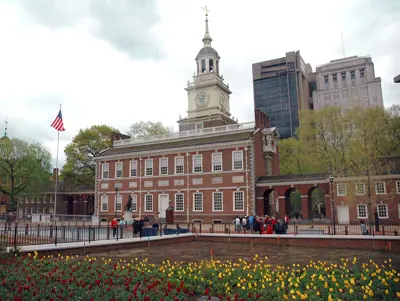
The Continental Congress was a series of legislative bodies which met in the British American colonies and the newly declared United States just before, during, and after the American Revolution. The term "Continental Congress" most specifically refers to the First and Second Congresses of 1774–1781 and may also refer to the Congress of the Confederation of 1781–1789, which operated as the first national government of the United States until being replaced by the current congress. Thus, the term covers the three congressional bodies of the Thirteen Colonies and the new United States that met between 1774 and 1789.
