William Pitt the Younger Quotes
… most accursed, wicked, barbarous, cruel, unnatural, unjust and diabolical.
William Pitt, 1759-1806, British Prime Minister, (Elected at 24 as the youngest British Prime Minister), Characterization of the American Revolution
Sourced by: Eigen's Political and Historical Quotations

Earlier, his father had also castigated the ministers over their inept hard-line handling of the American Revolution. See {641505} .

Howe had written Franklin attempting to stave off a American break with England. Franklin, with the approval of the Continental Congress, replied.


St. Domingue was the name of Haiti which had had the only successful national slave revolt, but it was incredibly bloody with many casualties.


This and other quotations like {640611} and {640616} show that the State Department knew that Mobutu Sese Seko, the man we were backing in the Congo had many very undesirable characteristics for a dependable foreign ally and one who would be given control of billions of American money. Yet nothing was done and we continued to support him despite the kleptocracy and the instability that undermined his regime and the United States along with it.

In 1775 Brown University decided to forgo the usual public Commencement and celebration due to:
He was acting as French Foreign Secretary at the time.
At that time, Russia and Germany were autocracy, and the ruler could simply take the English money and force the soldiers to fight in a war they had not stake in nor understood.


Porfirio Diaz - the longtime dictator of Mexico stole the election of 1910 and had his opponent Francisco Madero arrested and imprisoned. Madero got out, crossed the border to San Antonio, and issued this declaration which started the Mexican Revolution.


Marion was the initiator of Guerilla Warfare and he and his men traveled lightly spending much time in the South Carolina swamps. They had few supplies and when chased by the British could not stop to hunt. The British called him the “Swamp Fox”. The American colonists at this point still thought of the British as “their countrymen.”
There was continuing tension between England, the Colonial Governors of South Africa and the Boers. Immigrant settlers to South Africa from Holland. The Boers were very uneducated and not steeped in democratic government. They wanted to enslave and sieze the land of the Black residents. Under English law, the Blacks were also English subjects. The Boers insisted that any interference in their persecution and enslavery of the Blacks was oppression just as the Southern American Whites saw Reconstruction defense of the Blacks as oppression to them. The classic question is: “Is it oppression to stop people from opressiong others?”

Chile with help from San Martin had ejected the Spanish. O’Higgins, the Chilean leader had joined up with San Martin and served under his command. The sectional rivalry bothered men like Carrera. Instead of seeing all the South Americans fighting the Spanish as allies as O’Higgins did, Carrera and his brothers refused to join a government of unity and they and their troops were just as dictatorial and cruel as the Spanish had been. O’Higgins gave Indians and Blacks equal rights with whites which distressed the aristocratic Carrera’s. Finally the Carrera’s tried to set up their own government, and the new Chilean government disarmed their militia and executed two of the three Carrera brothers who were leading the militia troops who were little more than thieves and brigands.

The Greeks committed many atrocities in their war with Turkey. See {584483}
The organization sent 2,100 volunteers to fight for South American independence from Spain.

While the official battles of the American Revolution did not begin until 1776, parts of the American colonies were in a de facto state of rebellion and the British could not enforce their laws. See {636925} for another of the King’s statements.


The French Revolution with the rise of Napoleon was a classic example. The American Revolution was an exception.
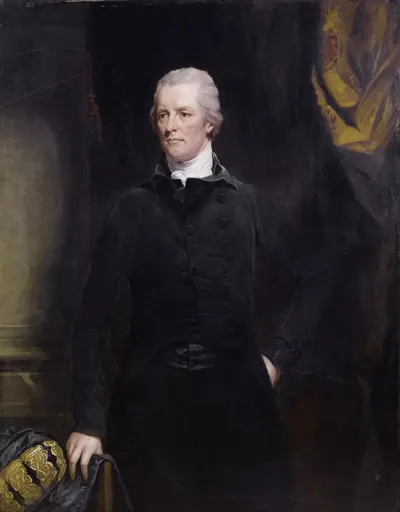
William Pitt the Younger was a prominent British Tory statesman of the late eighteenth and early nineteenth centuries. He became the youngest prime minister of Great Britain in 1783 at the age of 24 and the first prime minister of the United Kingdom of Great Britain and Ireland as of January 1801. He left office in March 1801, but served as prime minister again from 1804 until his death in 1806. He was also Chancellor of the Exchequer for all of his time as prime minister. He is known as "the Younger" to distinguish him from his father, William Pitt, 1st Earl of Chatham, who is customarily referred to as "William Pitt the Elder" (or less commonly, simply "Chatham") and had previously served as prime minister.
