George Mason Quotes
When the last dutiful & humble petition from Congress received no other Answer than declaring us Rebels, and out of the King’s protection, I from that Moment look’d forward to a Revolution & Independence, as the only means of Salvation; and will risque the last Penny of my Fortune, & the last Drop of my Blood upon the Issue.
George Mason, 1725-1792, Member, Virginia & Federal Constitutional Conventions, October 2, 1778
Sourced by: Eigen's Political and Historical Quotations

This was written more than a year before the American Revolution Battles began. It took time to ship the men and supplies to America and the British did not handle that task with much efficiency. See {636926} for another of the King’s statements.

At the time of the American Revolution there were strong abolitionist forces working against slaver and the slave trade. Southern American slave-owners, the political leadership of the South, feared that England would force slavery reforms on their colonies. Hence, severance from England eliminated that threat. In retrospect, they were quite right for it was England which outlawed the slave trade and led the worldwide anti-slavery movement which had little effect on the new independent America and the political bias in favor of the south of the American compact caused slavery to survive in America, long after the vast majority of the population would have it ended. It took the Civil War to do it.

Most Canadians supported the English despite the letter.

The treaty ending the Revolutionary war guaranteed that the English bankers and merchants who had debts going back to before the American Revo
lution would have “no impediment” in collecting their debts in America. However, Rhode Island and Virginia in particular placed many impediments and made it virtually impossible for debts to be collected in their states. The John Jay led Supreme Court, in particular, overturned state actions on the grounds that they had implemented Patrick Henry’s sentiment and hence violated the treaty.

Marion was the initiator of Guerilla Warfare and he and his men traveled lightly spending much time in the South Carolina swamps. They had few supplies and when chased by the British could not stop to hunt. The British called him the “Swamp Fox”. The American colonists at this point still thought of the British as “their countrymen.”

Fox was one of the opposition leaders who were opposed to the heavy handed policies that the British King and Government had used.

Les Américains ont échappé à l'Angleterre.


Americans were by no means united in wanting to take up arms against Britain. Relatively few of the loyalist quotations have come down to us, but here is one. It also illustrates why some Americans wanted complete independence: So that they could escape their debts to English merchants. Most however had more noble and unselfish motives. As a matter of fact, the American Revolution is unusual in the sense that there were so many men of substance who sacrificed much of their material wealth for the American ideal. There were also the rogues and opportunists as Galloway describes.


1st Earl of Chatham. The speech was given in the midst of the American Revolution.


This quotation shows that the dissent leading to the American Revolution did not emerge suddenly in 1776 after the Battle of Bunker Hill. Dissent, sedition and even violence was documented here in 1774. Salem at the time was the second largest port in the colony and the customs tax collectors—Loyalist Americans—were run out of Salem.
This was written more than a year before the “blows” began. It took time to ship the men and supplies to America and the British did not handle that task with much efficiency.
While the official battles of the American Revolution did not begin until 1776, parts of the American colonies were in a de facto state of rebellion and the British could not enforce their laws. See {636925} for another of the King’s statements.

In most revolutionary settings leaders have to persuade people who have voted with no success to turn to the rifle. In Ireland at this point, almost all the nationalsits knew that the rifle would help them but they were not sure that a vote would have the effect of a bullet.
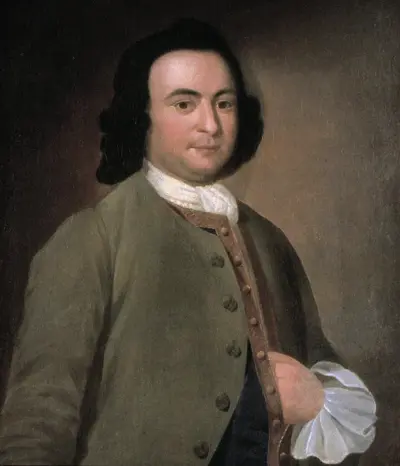
George Mason IV was an American planter, politician and delegate to the U.S. Constitutional Convention of 1787, one of three delegates who refused to sign the Constitution. His writings, including substantial portions of the Fairfax Resolves of 1774, the Virginia Declaration of Rights of 1776, and his Objections to this Constitution of Government (1787) opposing ratification, have exercised a significant influence on American political thought and events. The Virginia Declaration of Rights, which Mason principally authored, served as a basis for the United States Bill of Rights, a document of which he has been deemed a father.
