South Carolina Quotes
Any person who shall apply for registration after January 1, 1898, if otherwise qualified, shall be registered; provided that he can both read and write any section of this constitution submitted to him by the registration officer or can show that he owns and has paid all taxes collectible during the previous year on property in this state assessed at three hundred dollars or more
In 1895, a Constitutional Convention was held in South Carolina in which there were no Republicans allowed and no Negroes despite the fact that 60 percent of the population at the time was Black. The constitution was do written that it would go into effect without being submitted to the people for any kind of ratification or approval. Essentially a tiny minority of wealthy white men of one particular persuasion not only determined the political future of the state, but also defined the requirements for voting so that this minority could perpetuate itself thereafter.
South Carolina Voter Registration Eligibility Clause Constitution of 1895
Sourced by: Eigen's Political and Historical Quotations

Preclearance was a requirement that any change in the voting or registration laws, rules or procedures needed to be approved by the Federal Justice Department. He was testifying about why preclearance was important and why it was placed in the Voting Rights Act every time it was reauthorized. See {635271} for what happens without preclearance.

At the time Negroes were prohibited from voting by a series of discriminatory criteria for voter registration and intimidation so that Blacks would not generally even try to register. But the Civil Rights movement changed tactics and organized large scale attempts at voter registration. Mayor Thompson and the white power structure of the town were not going to allow that. They had not only enlarged the police department but the city purchased an a small armed tank.

In the South racism was so extensive that Blacks were not allowed to even vote. Brooke had moved from the South to Massachusetts and there as in the North, Midwest and West, African Americans could vote. So the first time Brooke ever voted he was a candidate.

Preclearance was a requirement that any change in the voting or registration laws, rules or procedures needed to be approved by the Federal Justice Department.

The President was asking for passage of his Voting Rights Bill.

At that time a number of state legislatures all changed their state voting laws to require citizens who try to register to vote to have documentation of various kinds and or obtain special documentation. These were generally possessed by upper class and educated people but not in as large proportions by lower and working class people. To obtain the documents and register if things like original birth certificates were not possessed, the citizen had to lose much of a day’s work and travel some distance. The burden existed on most lower class people and especially the minorities. The courts nullified some of these discriminatory requirements for voter registration, but many were allowed. The rationale was to prevent voter fraud and yet there were almost no cases of voter fraud in the entire country. While the requirements were racially discriminatory, they were also socioeconomically discriminatory. By coincidence, or perhaps not, every state that added these requirements had a Republican controlled state legislature AND a Republican Governor. Despite the effort to suppress Obama and Democratic voters, the effort backfired. Minorities and especially Blacks were so outraged that Jim Crow voting suppression had returned that they made a huge effort to register and get out the vote and Blacks voted in a much larger proportion than historical and well over 90 percent voted for Obama who won the election handily.

This phrase was also to be used over 100 years later by Malcolm X. See {624101} and {38291}.


The Republican party in the beginning of the 21st century had veered sharply to the right. Since the party controlled a many of Governor’s and state legislatures, some overly partisan people started passing laws and election rules that would inhibit the poor and minorities—who tended to vote Democratic—from voting. This was opposed by many of the traditional Republicans who had been national leaders over the years in expanding and facilitating voting.

Vardaman, on of America’s worst racists, was one of the main drafters of that constitution. This is an example of why the Voting Rights Act was later needed to unravel a endemic system of keeping African Americans from voting or having any part in politics.


This speech is often referred to as the “Ballot or the Bullet” speech. It was the first time that Malcolm X used the “Ballot or the Bullet”. He was not the first African American to use the “Ballot or the Bullet” phrase. See {624102} for a use over 100 years ago. However, he was really arguing to allow Blacks to vote in the South where it was almost impossible at the time. There was no Voting Rights Act at that time and it was his actions that helped pass one shortly thereafter.

In a campaign speech in Charleston, Illinois where there were a large proportion of settlers of Southern extraction he said the following which was at variance with sentiments he had expressed weeks before in a speech in Chicago:

Surprisingly to most of us, Indians and Blacks could vote in Virginia before 1723. They could even hold public office until 1705 when Virginia passed a law banning that. See Quotation 643587. 18 years later the Virginia legislature also outlawed these minorities from voting as this quotation demonstrates.


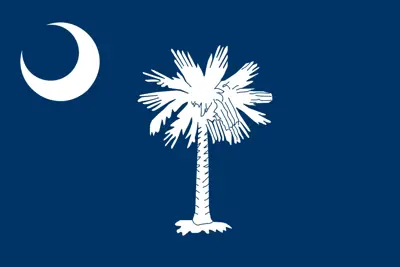
South Carolina (/ˌkærəˈlaɪnə/ (listen)) is a state in the Southeastern region of the United States. It is bordered to the north by North Carolina, to the southeast by the Atlantic Ocean, and to the southwest by Georgia across the Savannah River. South Carolina is the 40th most extensive and 23rd most populous U.S. state. In 2019 its GDP was $213.45 billion. South Carolina is composed of 46 counties. The capital is Columbia with a population of 133,273 in 2019; while its largest city is Charleston with a 2019 population of 135,257. The Greenville–Anderson–Mauldin metropolitan area is the largest in the state, with a 2018 population estimate of 906,626.
