James K. Vardaman Quotes
There is no reason to equivocate or lie about it. The Mississippi Constitutional Convention of 1890 was held for no other reason than to eliminate the nigger from politics…let the world know it just as it is.
Vardaman, on of America’s worst racists, was one of the main drafters of that constitution. This is an example of why the Voting Rights Act was later needed to unravel a endemic system of keeping African Americans from voting or having any part in politics.
James Kimble Vardaman, 1861-1930, Governor of Mississippi (Democrat), U. S. Senator (Democrat, MS), Comment on the Mississippi Constitutional Convention of 1890
Sourced by: Eigen's Political and Historical Quotations

Preclearance was a requirement that any change in the voting or registration laws, rules or procedures needed to be approved by the Federal Justice Department. He was testifying about why preclearance was important and why it was placed in the Voting Rights Act every time it was reauthorized. See {635271} for what happens without preclearance.

He was not only an atheist himself, but he was a major opponent of organized religion which he regarded as one or the major initiators and drivers of slavery, segregation and discrimination. For this reason he was critical of Martin Luther King—{583307}. His irreligiosity had always prevented his gaining much support from his fellow African Americans even though a great writer like H. L. Menken considered Schuyler, "the best writer in America".

In the South racism was so extensive that Blacks were not allowed to even vote. Brooke had moved from the South to Massachusetts and there as in the North, Midwest and West, African Americans could vote. So the first time Brooke ever voted he was a candidate.

Billy Sunday was the most famous preacher of the day. Unlike the vast majority of white preachers, he not only preached to black audiences but exuded an atmosphere of friendliness and comfort around Blacks that amazed most. Most Black leaders thought Sunday was very good for race relations, but there were some critics like Grimke. Sunday was castigated by many racist whites for preaching to Blacks, but he did not go as far as to condemn or preach against racism and the discrimination of the day and he would not preach to an integrated audience. See {585416} for another critique.


Booth was the younger son of a very prominent Northern family of actors. His older brother was considered the greatest American actor, and the rest of the family were abolitionists and vehement Union supporters. They found young John’s views reprehensible.

Incredible as it seems today, no Black person had ever dined in the White House as a guest of the President. African American servants were common. And Abraham Lincoln had received many Black visitors as had Presidents after him. But no president had ever had a Black person to dine as a social equal. The photo, reproduced here, illustrates the parity. But that was the worst thing a President could do so far as Tillman and his fellow racists were concerned. They had, since the end of the Civil war, used violence and terrorism to murder, maim and/or intimidate the Negro population to remain in an economic and socially inferior position. In Tillman’s state over these decades they had more lynchings than legal executions and there were plenty of them. Newspapers over the South riled up the whites and there was a wave of terror to be sure that the President’s importune action would not be taken as an endorsement of the Negro’s right to any equality or even dignity. This dinner essentially wedded all the Blacks to the Republican Party and all the Southern Whites to the Democratic Party. This would remain the political situation for over 60 years until the Democrats passed the LBJ Civil Rights Act in 1964 and the Republicans decided to solicit the Southern White racists who accepted the invitation and within a few years, there was a complete reversal of party loyalty of most Blacks and most Southern White Racists.


Vladimir Lenin. In their quest for world revolution, the Russian Communists had more problems with arguments in the United States whose reforms and economy had produced a very high standard of living. They knew that to effect a revolution, they had to reach the middle class and the intellectuals. They had little economically to attack America with but they were able to attack the United States morally. Even though segregation was legal in America at that time, many Americans thought it immoral. Most of the rest of the world did also. So that was one of the attack points. Since the communists opposed U. S. racial segregation, many Southern segregationists used a perverted logic and accused everyone who opposed segregation of being a communist. In addition to racial segregation, the Communists attacked other forms of discrimination such as anti-Catholic, anti-Asian, and anti-Semitic (See {638737} ) behavior.

This quote illustrates the Southern segregationist view in the Jim Crow South.

The rich whites won the class war by splitting the poor and working class with race hatred and then coopting one half—the poor whites so that neither the poor whites or blacks obtained much and even into the 21st century the poor of the American South were the worst off of all the poor in America.
This was art of the Nixon "Southern Strategy" to alienate the white supremacists and racists from the Democratic Party with Civil Rights legislation and rhetoric, and get most of them to become Republicans. But as Phillips observed, when Negroes began voting in significant numbers in the South the party switching really accelerated.


Negro volunteers were actually preferred under the theory that their ancestry made them more immune to malaria and other tropical diseases in Cuba.

Slogan used to protest the injustice of segregation in the nation’s capital:

Perhaps there is no more dramatic quotation illustrating MacArthur’s arrogance where his own views and decisions should obviously prevail regardless of the policies of his superiors and his commander-in-chief. The army had been officially integrated by President Truman, The reality was that the general honestly believed that he had no superiors among the military, that civilians should not control the military, and in any event that the President—Truman—was not fit to be Commander-in-Chief.


The President was asking for passage of his Voting Rights Bill.


The Republican party in the beginning of the 21st century had veered sharply to the right. Since the party controlled a many of Governor’s and state legislatures, some overly partisan people started passing laws and election rules that would inhibit the poor and minorities—who tended to vote Democratic—from voting. This was opposed by many of the traditional Republicans who had been national leaders over the years in expanding and facilitating voting.
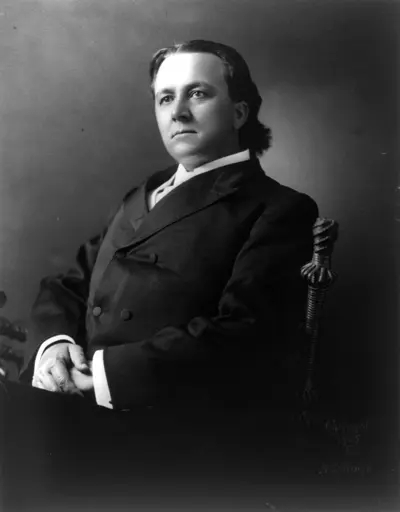
James Kimble Vardaman was an American politician from the U.S. state of Mississippi and was the Governor of Mississippi from 1904 to 1908. A Democrat, Vardaman was elected in 1912 to the United States Senate in the first popular vote for the office, following adoption of the 17th Amendment. He defeated incumbent LeRoy Percy, a member of the planter elite. Vardaman served from 1913 to 1919.
