William F. Buckley Jr. Quotes
The great majority of negroes in the South who do not vote, do not care to vote and would not know for what to vote if they could.
William F. Buckley Jr., Political Columnist and Author, Conservative party candidate for New York Governor 1957, Quoted in Ta-Nehisi Coates, “Fear of a Black President”, The Atlantic, September 2012
Sourced by: Eigen's Political and Historical Quotations

In the South racism was so extensive that Blacks were not allowed to even vote. Brooke had moved from the South to Massachusetts and there as in the North, Midwest and West, African Americans could vote. So the first time Brooke ever voted he was a candidate.

Preclearance was a requirement that any change in the voting or registration laws, rules or procedures needed to be approved by the Federal Justice Department. He was testifying about why preclearance was important and why it was placed in the Voting Rights Act every time it was reauthorized. See {635271} for what happens without preclearance.


This was art of the Nixon "Southern Strategy" to alienate the white supremacists and racists from the Democratic Party with Civil Rights legislation and rhetoric, and get most of them to become Republicans. But as Phillips observed, when Negroes began voting in significant numbers in the South the party switching really accelerated.


At the time the Democratic Politicians of the South went to extremes from refusing to register Black voters to countenancing assault, torture and even murder of Blacks who organized voter registration. When the racists switched to the Republican party, is was Republican politicians who tried to make voter registration and voting more difficult for minorities, but the means and degree of these efforts were very mild compared to what is was when Rustin uttered this quotation.

At that time a number of state legislatures all changed their state voting laws to require citizens who try to register to vote to have documentation of various kinds and or obtain special documentation. These were generally possessed by upper class and educated people but not in as large proportions by lower and working class people. To obtain the documents and register if things like original birth certificates were not possessed, the citizen had to lose much of a day’s work and travel some distance. The burden existed on most lower class people and especially the minorities. The courts nullified some of these discriminatory requirements for voter registration, but many were allowed. The rationale was to prevent voter fraud and yet there were almost no cases of voter fraud in the entire country. While the requirements were racially discriminatory, they were also socioeconomically discriminatory. By coincidence, or perhaps not, every state that added these requirements had a Republican controlled state legislature AND a Republican Governor. Despite the effort to suppress Obama and Democratic voters, the effort backfired. Minorities and especially Blacks were so outraged that Jim Crow voting suppression had returned that they made a huge effort to register and get out the vote and Blacks voted in a much larger proportion than historical and well over 90 percent voted for Obama who won the election handily.

The President was asking for passage of his Voting Rights Bill.


Blacks were fighting and dying in WWII. They were equal when they were under fire, but otherwise not. The war was against fascist protagonists whose creed was inequality while the allies were upholding freedom and equality. But making that aspiration a reality was difficult.

This phrase was also to be used over 100 years later by Malcolm X. See {624101} and {38291}.


The president was commenting on a Donald Trump campaign statement that African American were in the worst shape in history when the reality was just the opposite


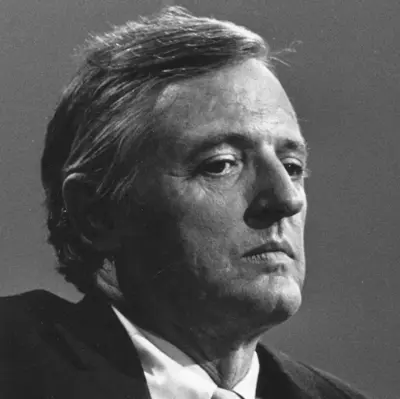
William Frank Buckley Jr. was an American public intellectual and conservative author and commentator. In 1955, Buckley founded National Review, a magazine that stimulated the conservative movement in the late-20th century United States. Buckley hosted 1,429 episodes of the public affairs television show Firing Line (1966–1999), the longest-running public affairs show in American television history with a single host, where he became known for his distinctive Mid-Atlantic idiolect and wide vocabulary.
