Christopher Columbus Quotes
And I say that Your Highnesses ought not to consent that any foreigner does business or sets foot here, except Christian Catholics, since this was the end and the beginning of the enterprise, that it should be for the enhancement and glory of the Christian religion, nor should anyone who is not a good Christian come to these parts.
Columbus, Christopher. The Journal of Christopher Columbus (during His First Voyage, 1492-93). Translated by Clements R. Markham, Hakluyt Society, 1893, p. 91.


Smith was the first Catholic to run for the Presidency. There were many who opposed him who were anti-Catholic bigots. Were it not for this religious discrimination Smith would almost certainly have been President.


This sura has been in great controversy throughout the Muslim Empires. In part it separates many of the Arab cultures from the Ottomans. The latter had an organized meritocracy whereby Jews, Christians and other “heathens” of exceptional talent were sought out for advisory and leadership positions. In part this was justified as requiring that the Caliph and the Sultans had the power of life and death over their key appointees, hence they had to be slaves and other suras prohibited Muslims holding other Muslims in slavery. Even in modern times some Muslim countries have had key non-Islamic appointees and others would not. In historical practice, the Ottoman Empire utilized far more Christians and Jews that those societies involved Muslims until relatively recent historical times.

The Jesuits had been among the first Christian missionaries to Japan. Educationally very strong they developed Latin-Japanese dictionaries and taught other Jesuits Japanese and soon, the Jesuits were not only successful at converting Japanese to Christianity, but they were fantastic as merchants and traders. They made so much money that the Jesuit order became a power itself to some rivaling the Vatican. The Jesuits had an independence from the Catholic Hierarchy and their money allowed them to get almost anything they wanted. This famous Bull, in effect, gave the Jesuits a monopoly on trade and on souls.

New Ross was under siege by Cromwell and his English Parliamentarian troops. After two days, the town tried to negotiate terms of surrender and one of the main things they asked for was freedom of religion to practice Roman Catholicism. This famous response set the stage for religious bigotry over the next years. Cromwell’s reasons for not allowing Catholicism to be practiced was not only one of religious zeal. At the time, the Roman Catholic Church was a major geopolitical power under a Pope who commonly supported or even dispatched troops for geopolitical and religious ends. The Vatican was particularly resentful of England for separating from the Church and asserting that the King of England was the head of the Church and not the Pope. Therefore Cromwell and many Englishmen had to deal with the reality that every practicing Catholic in the realm was a potential spy, traitor, and/or rebel. This fear of control of countries by the Pope strongly affected America, and was responsible for the defeat of the first Catholic Presidential Candidate, Al Smith. It was also a major factor in the election of John F. Kennedy so he dealt with it head on.


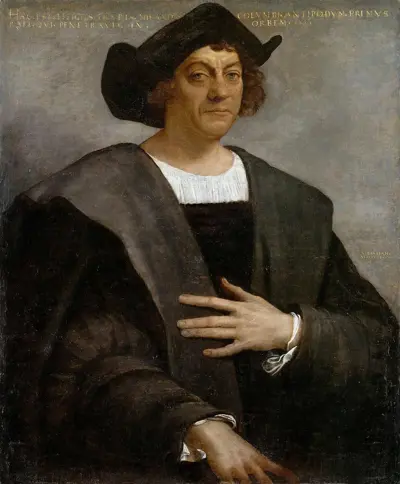
Christopher Columbus was an Italian explorer and navigator who completed four voyages across the Atlantic Ocean, opening the way for the widespread European exploration and colonization of the Americas. His expeditions, sponsored by the Catholic Monarchs of Spain, were the first European contact with the Caribbean, Central America, and South America.
