Stanley Hauerwas Quotes
One of the problems with the identification of Christianity with love is how such a view turns out to be both anti-Semitic and anti-Catholic. The Jews and Catholics become identified with the law or dogma, in contrast to Protestant Christians, who are about love.
Hauerwas, Stanley. Approaching the End: Eschatological Reflections on Church, Politics, and Life. Wm. B. Eerdmans Publishing Co., 2013.


What the historian did not know was how similarly the Protestants would behave against the Catholics when they had the power. Since the Catholics were the established church, and the Protestants the new “heretics” the Protestants were on the receiving end of most of the atrocities at the beginning. However, as if they had been scholled by their horrible experiences, they repeated them just exchanging the perpetrators and the victims.

At the time he was referring to Protestants & Catholics. Today we have Muslims vs. Jews & Christians.
Toleration is a relative term. The Muslim Moors made Christians (and Jews) pay a special tax. At times they were forced to wear special clothing so that they could be readily identified. And they could not build churches larger or taller than the smallest mosque in the community. At times, their occupations were restricted but at other times Christians and Jews were appointed to the highest positions like Vizier. The Inquisition, in contrast, forced all Muslims (and Jews) to leave the country without any of their property or money or be tortured and killed—usually by burning at the stake unless of course that they converted to Christianity.

The Nazis did not create German anti-Semitism for the first time. Germany had a long brutal history of murder and torture. Luther was a virulent Anti-Semite. But he was not always such. See {629231} for totally contradictory writing earlier in his career. The Modern Lutheran Church does not currently follow any of Luther’s anti-Semitic dicta and has repudiated his views on murder for the glory of the religion, although many did support it in WWII. What is stunning about this quotation is that this religious leader was advocating burning houses of God, schools and people for the “glory” of God and Christianity. However all major religions had viscous and bloody pasts. Most adherents have rejected that past as being misguided, primitive and incompatible with the modern, more noble view of the religion while only a few religious extremist fundamentalist still adhere to the darker history and interpretation of the religion.

His intolerance and bigotry not only is of Muslims and Hindus, but extends to some Protestant denominations as well. See {643060} for additional examples of bias on the part of this erstwhile Presidential aspirant. To him, religions, unless they agree with his religious beliefs, are evil and dangerous to society.


Poland was one of the Nazi occupied nations which cooperated in the mass murder of Jews and facilitated the Holocaust. Even after the war, much of the Polish Catholic clergy maintained virulent anti-Semitic views and in 1946 Polish thugs with the encouragement of some priests engaged in a pogrom in Kielce of returning Polish Jewish refugees. Catholic Primate of Poland, Augustus Hlond, made numerous anti-Semitic statements further exacerbating the problem. Many cast blame on Pope Pius XII who was not very vocal during the Nazi era regarding the ill treatment and murder of Jews, Gypsies, and handicapped, giving a “green light” to the Polish Prelate and those lower anti-Semitic priests. Papal apologists note that Hitler could have turned on the Catholic Church; the Pope had to walk a fine line between condemning evil and risking the welfare of the Church. Nonetheless, many Catholic priests risked and some lost their lives speaking out against the Nazi evil and protecting Nazi targets.

The term “gentile” was used in the Old Testament to indicate someone who was not of God’s Chosen People—one who was not a Jew. But the Mormon’s used the Biblical term to refer to people who were outside the Mormon faith. When Bamburger ran for the Governorship, there had been only one other Jewish governor in America. At a campaign rally a Mormon anti-Semite called him a “Damned Gentile.” This reply was typical of his humor, and the majority of the state voters and the Mormons voted for him making Bamburger the second Jewish Governor in America.

This quotation was used by the Lyndon B. Johnson 1964 Campaign as: “We represent the majority of the people in Alabama who hate niggerism, Catholicism, Judaism, and all the isms of the whole world.” So said Robert Creel of the Alabama Ku Klux Klan. He also said, “I like Barry Goldwater. He needs our help.” The second statement was made at a different time.

It was not until 1780 that Catholics were allowed to even be members of Town Corporations.


This was early in his career. As he got older, he was very frustrated with the Jews who would not convert to Christianity even after he had “purified” the religion and freed Christians from the “evils” of the Papacy. He became a virulent anti-Semite. See {617773}.

These kinds of inflammatory sermons are delivered with the approval of the king and royal family who crack down on any cleric who preaches what they do not approve of.
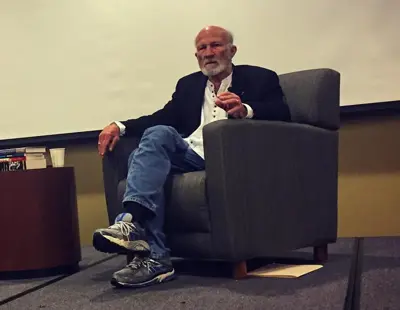
Stanley Martin Hauerwas (born 1940) is an American theologian, ethicist, and public intellectual. Hauerwas was a longtime professor at Duke University, serving as the Gilbert T. Rowe Professor of Theological Ethics at Duke Divinity School with a joint appointment at the Duke University School of Law. In the fall of 2014, he also assumed a chair in theological ethics at the University of Aberdeen. Before moving to Duke and the University of Aberdeen, Hauerwas taught at the University of Notre Dame. Hauerwas is considered by many to be one of the world's most influential living theologians and was named "America's Best Theologian" by Time magazine in 2001. He was also the first American theologian to deliver the prestigious Gifford Lectures at the University of St. Andrews in Scotland in over forty years. His work is frequently read and debated by scholars in fields outside of religion or ethics, such as political philosophy, sociology, history, and literary theory. Hauerwas has achieved notability outside of academia as a public intellectual, even appearing on The Oprah Winfrey Show.
