Warren E. Burger Quotes
Advocacy is in the courtroom—not out in the streets.
Warren E. Burger, 1907-1995, Chief Justice of the U. S. Supreme Court, Defending the practice of banning demonstrations at the Supreme Court, Interview, PBS MacNeil-Lehrer News Hour, September 13, 1990
Sourced by: Eigen's Political and Historical Quotations


Several years before the Battle of Bunker Hill, revolutionary activity had already broken out in the American colonies—See {634132} for an example. This law gave the British authorities much more “clout” in dealing with the “seditious” American activities. It protected English law enforcement officials from being tried in local Colonial courts for murder or assault in putting down insurrections. George Washington and other Patriots were outraged over this law. See {634131}.


He was then the Home Secretary and his guidance and restraint was to avoid overreaction. The magistrates however did not act with great restraint over a series of demonstrations which culminated in 11 deaths in The Peterloo Massacre,

The two law enforcement officers had testified that they arrested demonstrators who had “come to break the law” and had not at that point broken any laws.

This is one of the earliest documents articulating methods of campaigning in a democracy.

Referring to civil rights suits during the Reagan administration:

The State Police then attacked the demonstrators with night sticks, bull whips and tear gas. The demonstrators were trying to cross the bridge to Montgomery. There was no legal Constitutional way that the marchers could be stopped, but the Alabama State Police then constantly violated the law.

This quotation was documented by an FBI illegal wiretap of King and his associates. The illegal wiretap had been insisted upon by FBI Director J. Edgar Hoover who was a racist and somewhat of a paranoid about communists. However, Attorney General, Robert F. Kennedy personally approved the illegal wiretap.


Earlier, a virtually all white police force in nearby 67% Black Ferguson, had shot an unarmed black young man who was 20 feet away with his hands up, 7 times killing him and then leaving the body uncovered on the street for over 4 hours. Many people of all races began to peacefully demonstrate in Ferguson and were met with military assault weapons pointed at them and military armored vehicles, with the police illegally (as later determined by the courts) were interfering with the right to protest. The demonstrations turned to riots and there was looting and arson of business establishments. The demonstrations started to spread to nearby St. Louis and other cities as the news spread. While the Ferguson officials had behaved so badly and stupidly, the St. Louis mayor exhibited democratic leadership that was an example for others. Slay was then a 4 term mayor, being reelected more than any other mayor in St. Louis history, and was one of the outstanding politicians in America.


Two protesters were killed. The demonstration so affected the government that they pressured the Belfast local authorities to announce substantial increases in relief. The economy and the employment picture got no better that year.

Hirsh had uncovered CIA illegal surveillance of anti Vietnam war protesters in the late 1960s. They broke two sets of laws. First, the CIA had no authority to investigate and track American Citizens anywhere but particularly American citizens. Second, the FBI which did have the authority to investigate Americans, were not allowed to use the methods that the CIA did. They violated not only Federal Law and Rules, but also violated the 4th Amendment Rights of thousands of citizens.

There were ongoing protests over the Vietnam war in many universities throughout the country. Agnew and some others thought that protests and demonstrations were not an appropriate method of maintaining a national discussion on the subject.


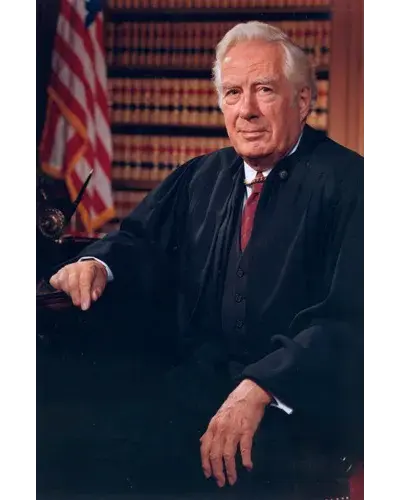
Warren Earl Burger was the 15th Chief Justice of the United States Supreme Court, serving from 1969 to 1986. Born in Saint Paul, Minnesota, Burger graduated from the St. Paul College of Law in 1931. He helped secure the Minnesota delegation's support for Dwight D. Eisenhower at the 1952 Republican National Convention. After Eisenhower won the 1952 presidential election, he appointed Burger to the position of Assistant Attorney General in charge of the Civil Division. In 1956, Eisenhower appointed Burger to the United States Court of Appeals for the District of Columbia Circuit. Burger served on this court until 1969 and became known as a critic of the Warren Court.
