John Adams Quotes
Admit that the press transferred the pontificate of Rome to Henry VIII-Admit that the press demolished in some sort the feudal system, and set the serfs and villains free; admit that the press demolished the monasteries, nunneries, and religious houses; into whose hands did all these alienated baronies, monasteries, and religious houses and lands fall? Into the hands of the democracy? Into the hands of serfs and villains? Serfs and villains were the only real democracy in those time. No. They fell into the hands of other aristocrats. . . .
Adams, John. Letter to Thomas Jefferson, 16 July 1814. The Works of John Adams, edited by Charles Francis Adams, vol. 10, Little, Brown and Co., 1856, p. 100.


These unfortunate characteristics of Germany at that time, produced the aggressive nation that started two world wars. Looking at Germany a century later, the country has changed radically—especially the three factors described in this quote. Germany has become very much like the rest of Western Europe and America.


Paine was totally wrong on this count. It is true that monarchy and aristocracy were never the same as they had been, but the American and French Revolutions were catalysts for the monarchs and aristocrats to reform. In a Darwinian sense, monarchy and aristocracy evolved, and the early members would hardly recognize the modern aristocracy of Britain and other European countries that still have them and the Constitutional monarchs of today have almost evolved into a new specie.


1st Viscount Bolingbroke. See {627799} for the origin of the bias against merchants and money men. It also represents a rigidity of class structure that characterized England until very recently. The landed gentry were the first class citizens. Usually titles went with the land. In America, someone who would be successful as a merchant or a banker could achieve the highest of social status and political influence. This was not true in England where a merchant that was far more wealthy than a landed lord was not accepted by the aristocracy.

A fief was an estate of land and people. The man who had the title to the fief was obligated to raise troops from his estates and lead then at the command of the King. Women, under English law could not inherit a fief—it went to the oldest son. However, once the military element of fiefdom was eliminated, Johnson saw no reason why women should no longer inherit feifs and the titles that went with them.


For a conservative this is an amazing position to take because the House of Lords was and is the most conservative institution in Great Britain. However, what makes Salisbury such an effective conservative political thinker is that the mere advantage of having a House of Lords to further the conservative agenda and protect its positions does not offset the principle of having a hereditary group of people—many without merit--with no checks on them by the rest of the body politic. Conservatism ought not support aristocracy but those who have achieved by merit.
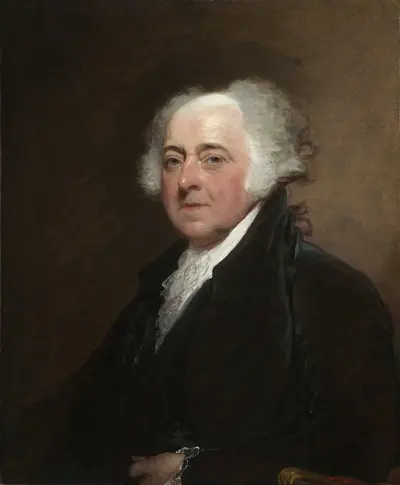
John Adams Jr. was an American statesman, attorney, diplomat, writer, and Founding Father who served as the second president of the United States from 1797 to 1801. Before his presidency, he was a leader of the American Revolution that achieved independence from Great Britain, and he served as the first vice president of the United States. Adams was a dedicated diarist and regularly corresponded with many important figures in early American history, including his wife and adviser Abigail Adams and Thomas Jefferson.
