Vilfredo Pareto Quotes
At the bottom of the Wealth curve Men and Women starve and children die young. In the broad middle of the curve all is turmoil and motion: people rising and falling, climbing by talent or luck and falling by alcoholism, tuberculosis and other kinds of unfitness. At the very top sit the elite of the elite, who control wealth and power for a time – until they are unseated through revolution or upheaval by a new aristocratic class. There is no progress in human history. Democracy is a fraud. Human nature is primitive, emotional, unyielding. The smarter, abler, stronger, and shrewder take the lion's share. The weak starve, lest society become degenerate:
Vilfredo Pareto, 1848-1923, Italian sociologist, economist and philosopher, Summary of his implication for his Pareto Curve
Sourced by: Eigen's Political and Historical Quotations

1st Viscount Bolingbroke. See {627799} for the origin of the bias against merchants and money men. It also represents a rigidity of class structure that characterized England until very recently. The landed gentry were the first class citizens. Usually titles went with the land. In America, someone who would be successful as a merchant or a banker could achieve the highest of social status and political influence. This was not true in England where a merchant that was far more wealthy than a landed lord was not accepted by the aristocracy.


The United States money was then on the Gold Standard. The country was growing and needed more money in circulation. But most of the gold that might be available was in England and English bankers could control much of the U. S. economy. The Populists and the Democrats wanted us to use silver to back U. S. money as there was plenty of silver in the United States. The Republicans would not relent and depression was upon the country. A half century later, it would be Republican President Richard M. Nixon, who took the United States off the gold standard. Lease was far ahead of her time.


Describing the annual conference in Davos, Switzerland where the very wealthy of the world gather and discuss mutual concerns.


In modern America, there are two political views of this notion. The one held by a narrow majority of the population is Trenchard’s quotation taken literally. Their view is that there is no way to maintain liberty if there is too wide a wealth gap between the rich and the rest of the population. The second variant, held by many conservatives, limits the equality to equality of opportunity. They are loathe to take any position that says that any gap between the rich and the remainder of the citizens might be too large. They would particularly disagree with the first sentence of this quotation. Another consideration is that this quotation does not even consider what became a major problem in the American Democracy—the ability and propensity of the very rich to bribe legislators and officials and/or make “campaign contributions” to obtain favorable treatment and/or “access”.
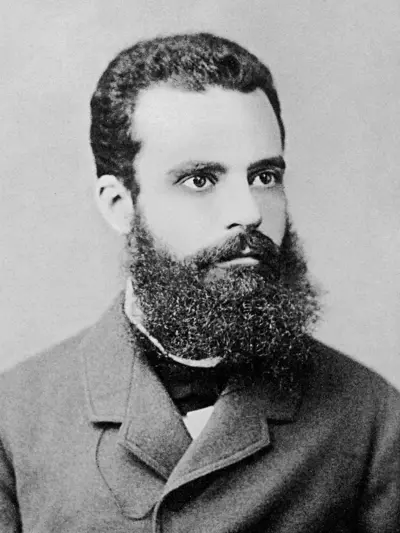
Vilfredo Federico Damaso Pareto was an Italian civil engineer, sociologist, economist, political scientist, and philosopher. He made several important contributions to economics, particularly in the study of income distribution and in the analysis of individuals' choices. He was also responsible for popularising the use of the term "elite" in social analysis.
