J. Edgar Hoover Quotes

This quotation was obtained via an FBI wiretap on Dr. King’s telephone. What makes it historically important is that J. Edgar Hoover’s FBI steadfastly maintained that King and his movement were philosophically communist in their reports to the President and others. For example, a CIA memo of the time reported that “According to the FBI, Dr. King is regarded in Communist circles as a genuine Marxist-Leninist who is following the Marxist-Leninist Line.” However, Hoover had this and other evidence of King’s antipathy to communism but suppressed this leading the administration and others to believe that the Civil Rights Movement, to which Hoover was unalterably opposed, was Communist influenced. See {603873}, {603891}, {603872}, and {603889} showing Hoover’s view of King and Blacks.

Levison had in his early years been involved with the American Communist Party. Then he broke with the party and denounced it. The FBI using Levison’s early history as a justification, tapped his phones and those of Dr. King’s. J. Edgar Hoover, a virulent opponent of Dr. King and the Civil Rights Moovement reported to President Kennedy and Attorney General Robert Kennedy that Levision was a communist and reported his early history. However, despite the fact that the FBI knew that Levison had broken with the communists, Hoover withheld this fact from the Kennedys who were alarmed that Levison represented a key communist influence in the Civil Rights Movement. King would not break with Levison. See {603873}, {603891}, {603872}, and {603889} showing Hoover’s view of King and Blacks.

The all white regular Mississippi Delegation was selected in elections where Blacks were barred from voting although Blacks were in the majority in Mississippi. In addition, the regular party was advocating obstructing the Supreme Court school integration decisions and the Civil Rights Act that had just been passed. See {637616}. The insurgent group was selected in integrated elections, contained black and white delegates, and was pledged to support and obey the laws. The President could not make the decision unilaterally, but had a great deal of influence.

A Black church had been bombed in Birmingham, Alabama among the general racial indignity visited upon the Blacks of that city. King’s conversation was not generally known until 2003 when the secretly recorded conversations of the Kennedy Presidency were released, transcribed and analyzed. Shortly after the conversation, JFK called five white leaders of Birmingham and upbraided them about the lack of progress in Birmingham.

Scott was then the Special Advisor on Negro Affairs to the Secretary of War in the Woodrrow Wilson administration. Wilaon hs commited U. S. Troops to fight oversease to "make the world safe for democracy", but many blacks and whites also saw gross hypocricy in asking Negores to fight for a Jim Crow, segregated America. See the related quotation 644805. Scott was also the major aide to Booker T, Washington, one of the leading Negro educators but a very pliable man on equal rights for the Blacks. The problem for the administration was much greater than that of WWII where the president was seen as very sympathetic to Blacks while Wilson was himself a racist. And in WWII the fight against the Nazis was a fight agaisnt racial supremacy. So this quotation and Scott's role was very important to the administration.


Jessie Helms was his young assistant who drafted this race baiting ad. There are two vicious but subtle aspects to this kind of attach ads. First, not that the ad does not address the problem of white men working along side of blacks. It only refers to wives and daughter. This interracial sex innuendo played on and increased the fear of whites that Blacks would commonly rape white women. The second nasty aspect of the ad is the specific attack on the opponent. Instead of saying that he favored desegregation, the phrase “mingling of the races” was used which implied that Graham was in favor of biracial intermarriage and children—again another sex innuendo. When integration of the workforce finally occurred in the South, there was no increase in Black men sexually assaulting white women. There has been a substantial increase in racial intermarriage however as racial bigotry has diminished in America.


His solution was not to change the prejudice or improve the opportunity for Blacks but to have complete separation of the races. See {625687}.


This quotation has been one that has been used to argue against Black and other minority racism as well as white racism.


Smith, an extreme racist, was so rabid that MacGregor was supporting the Civil Rights Bill, he followed him off the House floor to make this statement. MacGregor jokingly told Smith that he was wrong. He had 17 Negroes in his District.

When called upon to resign by members of the town council, he refused on the grounds that he had a right to freely express is views of President Obama or anyone else. There was no impeachment statute at the time in Wolfeboro and people were not happy about waiting for the next election. There was much pressure brought to bear including some who boycotted the town. He resigned 2 monnths later.


The president was commenting on a Donald Trump campaign statement that African American were in the worst shape in history when the reality was just the opposite
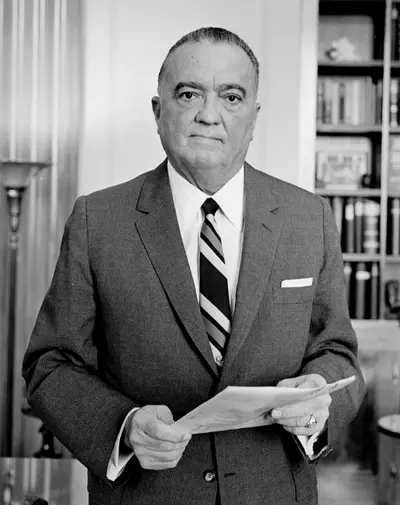
- Born: January 1, 1895
- Died: May 2, 1972
- Nationality: American
- Profession: Public Servant
John Edgar Hoover was an American law enforcement administrator who served as the first Director of the Federal Bureau of Investigation (FBI) of the United States. He was appointed director of the Bureau of Investigation – the FBI's predecessor – in 1924 and was instrumental in founding the FBI in 1935, where he remained director for another 37 years until his death in 1972 at the age of 77. Hoover has been credited with building the FBI into a larger crime-fighting agency than it was at its inception and with instituting a number of modernizations to police technology, such as a centralized fingerprint file and forensic laboratories. Hoover is also credited with establishing and expanding a national blacklist, referred to as the FBI Index or Index List, renamed in 2001 as the Terrorist Screening Database which the FBI still compiles and manages.
