Manu Quotes
A contract made by a person intoxicated, or insane, or grievously disordered by disease and so forth, or wholly dependent, by an infant or very aged man, or by an unauthorized party is invalid
Manava Dharma Shastra. This is the law to this day in almost every developed country. This text is a part of the Hindu Holy Texts. Hindus believe that Manu was a prophet whose text is revealed or inspired.
Manu, ~ 500 BC, Hindu Teacher from India, Laws of Manu
Sourced by: Eigen's Political and Historical Quotations

This is the oldest test in Western jurisprudence as to whether a person was insane at the time he/she committed a crime. In England, the House of Lords functions as the Supreme Court.

Manava Dharma Shastra. Here is a type of Freedom of Information Act in Ancient India. This text is a part of the Hindu Holy Texts. Hindus believe that Manu was a prophet whose text is revealed or inspired.


Manava Dharma Shastra. Drinking alcohol was a very serious sin for the upper three castes. The lowest caste, the untouchables, were permitted to drink however. The theory was that alcohol pollutes the individual soul. Since the lowest caste man is already polluted, it makes no difference. This text is a part of the Hindu Holy Texts. Hindus believe that Manu was a prophet whose text is revealed or inspired.
Manava Dharma Shastra. This text is a part of the Hindu Holy Texts. Hindus believe that Manu was a prophet whose text is revealed or inspired.
Manava Dharma Shastra. The Hindu caste system is one of the most brutal and rigid forms of discrimination in human history. It is interesting to note that even the lowest cast people—the “untouchables”—were thought worthy of being witnesses. In early America, in many places Native Americans and Blacks were not considered fit to be witnesses even though they were free and not slaves. This “liberality” did not apply to women however where even the highest caste was not considered fit for the function. This text is a part of the Hindu Holy Texts. Hindus believe that Manu was a prophet whose text is revealed or inspired.
Manava Dharma Shastra. 500 years before Christ, the Hindus took more official care of females’ property than we and most European cultures did until relatively modern times. In Anciend India, women could inherit and own property, but because of their relative inexperience and no education, they were taken advantage of by relative who were “managing affairs” for them. This text is a part of the Hindu Holy Texts. Hindus believe that Manu was a prophet whose text is revealed or inspired.
Manava Dharma Shastra. This text is a part of the Hindu Holy Texts. Hindus believe that Manu was a prophet whose text is revealed or inspired.


At the time, in many states married women could not control their own inheritance, could not sign a contract, owned no part of a family business that a women might have founded and worked in her entire life, could not be an executor of a will—even if it were her husband’s.

This ordinance opened the door somewhat to slavery again as Austin said it would “permit families to bring the necessary and indispensable house servants and laborers.” Earlier Mexican laws had abolished slavery in most of Mexico but left the door open in Texas. See {613642} and {613644}.

This is the earliest surviving attempt of the Romans to formulate a legal code.


The congressman had been addicted to alcohol, illicit and prescription drugs. Only in the latter part of the 20th century did we learn that addiction was a diseases—a brain disorder.

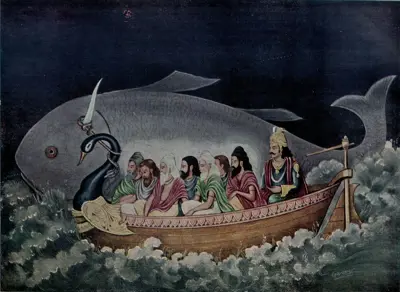
Manu (Sanskrit: मनु) is a term found with various meanings in Hinduism. In early texts, it refers to the archetypal man, or to the first man (progenitor of humanity). The Sanskrit term for 'human', मानव (IAST: mānava) means 'of Manu' or 'children of Manu'. In later texts, Manu is the title or name of fourteen mystical Kshatriya rulers of earth, or alternatively as the head of mythical dynasties that begin with each cyclic kalpa (aeon) when the universe is born anew. The title of the text Manusmriti uses this term as a prefix, but refers to the first Manu – Svayambhuva, the spiritual son of Brahma.
