Roger Pryor Quotes
Marriage has always been a subject of regulation by the State. Is marriage ever looked upon as only a private contract between the man and the woman, to be made whenever they alone think fit, to last only during the term they may agree upon, and to end at their own will? Is the State no party to such a contract? Has the State no voice in consenting that it shall be made, in regulating its conditions after it is made, and in determining when and how it may be dissolved? Away, then with this argument of the free-love school!
Roger Pryor, 1828-1919, Representative from Virginia, Confederate General, April 2, 1860
Sourced by: Eigen's Political and Historical Quotations


If a state or community legally decides that a fetus is a person, there are many situations where there is a conflict of interest between the mother to be and the fetus. A pregnant woman, having a single drink of alcohol, potentially dangers the fetus (called Fetal Alcohol Syndrome). Smoking is clearly hazardous to the health of the fetus (underweight babies and more infant mortality and even more SIDS deaths. A diet to keep a mother thinner may not be nutritious for the fetus, A few states and local government have started prosecuting pregnant women for their personal behavior that might be detrimental to the fetus—often the purpose is to assert the right of the state to regulate the behavior of the pregnant woman so that the state can control abortion.


This was his most famous speech.


At the time, in many states married women could not control their own inheritance, could not sign a contract, owned no part of a family business that a women might have founded and worked in her entire life, could not be an executor of a will—even if it were her husband’s.


Young said when Utah was admitted as a state, it would then have this right

Billinghurst was physically handicapped without the use of her legs. She protested and marched in protest parades using a hand propelled tricycle which the police sometimes dumped her out of and left her immobile in alleys.

TR came from a wealthy, upper class family, and because of his position favoring regulation of corporations he was called a traitor to his class by many.


Virtually every advance for the working class in England (and the other countries including America) was labeled “socialism” by the conservative economic factions of the time. However, socialists were strong advocates of all these economic reforms and even in the 19th century their impact was recognized.

The "administrative state" was the term used for a government had had powers and used them to regulate things and areas of society without each specific regulation being voted upon by the legislature. In America sicne the New Deal there have been so many areas that have regulations that a single agency like the Environmental Protection Agency might issue in a year more regulations than the entire Congress considers in all areas put together. All these regulatory powers are delegated by Congress passing legislation authorizing it, and Congress can legislate any change in any regulation it wants, but the modern state is so complesx and areas so specialzied that Congress has preferred to delegate. There are a few who legal scholars and politicians who believe that it is unconstitutional for the legislature to delegate powers to the executive branch and no regulations have validity unless specifically passed by Comgress. There are some others who have not taken a position on this point but who believe that of an administrative state can regulate phases of citizens lives it is bound to circumscribe personal freedom as all legislation does to some extent. This quotation was used by opponents of Judge Gorsuch in arguing that he was unfit for the Supreme Court as he was out of touch with the Administrative State which America gradually became and rapidly in the New Deal and in the 80 years thereafter a very extensive administrative state. Gorsuch's views were based on classic political pholosophy but there were some ultra conservatives who did not want any regulation of business by Congress or Administrative Agencies and therefore supported Gorsuch and the few others with this view as if Agencies were not able to issue regulations there was no practical way that Congress could issue as many and regulation would be reduced which is what they desired.


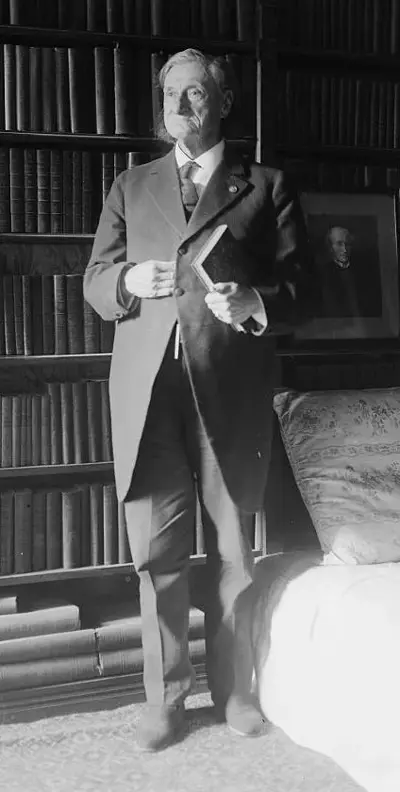
Roger Atkinson Pryor was a Virginian newspaper editor and politician who became known for his fiery oratory in favor of secession; he was elected both to national and Confederate office, and served as a general for the Confederate Army during the American Civil War. In 1865 he moved to New York City to remake his life, and in 1868 brought up his family. He was among a number of influential southerners in the North who became known as "Confederate carpetbaggers."
