William Byrd II Quotes
Marriage is reckon’d a lay contract in Carolina.
William Byrd II, 1674–1744, Receiver-General of Virginia, Member of the House of Burgesses, Writer, Colonel of Militia & Surveyor, 1728, Quoted in Cott, Public Vows, 2000
Sourced by: Eigen's Political and Historical Quotations


Refers to the marriage contract. Even in the sexist culture of early America, it was contrary to public policy to force or intimidate women into marrying men they would have preferred not to. None the less, even in modern times there are still a few religious sects which do not follow this fundamental principle of law and freedom.


Strong argued in petitioning a Connecticut court for divorce in 1788 that her husband’s abuse had removed her obligation to obey him


Abolition was an issue from the first Congress onward. By the 1850s there was a major, and in the view of the Southern Slavery enthusiasts, incessant political, journalistic, and intellectual attacks on slavery. The latter two really affected public opinion and opposition to slavery grew in intellectual and educated circles. This document was an example of the literature of the time where the attack on slavery was made by simply explaining the “logic and facts” of the existing laws of the slave states. Once exposed in their entirety, the horror and immorality of the institution was supplemented by the intellectual absurdity and logical fallacies of the pro slavery forces. Note the swipe Goodell takes at Congress. This kind of public criticism made it harder and harder for the Northern Congressmen to “go along” with the South on the slavery issue, and the next decade of increased polarization on slavery culminated in the Civil War. It was not the Southern representatives who changed, but consciousness raising and public opinion changed the Northern perspective and the voting of the Northerners to oppose slavery. Earlier “compromises” became no longer morally or politically acceptable.


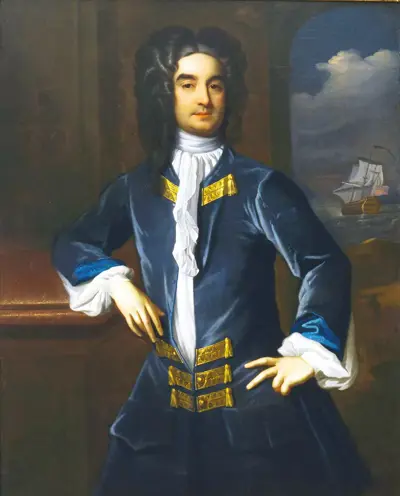
William Byrd II was an American planter and author from Charles City County in colonial Virginia. He is considered the founder of Richmond, Virginia.
