Frances Burney Quotes
You have sensible women here [in England] but then, they are very devils--censorious, uncharitable, sarcastic--the women in Scotland have twice--thrice their freedom, with all their virtue--and are very conversable and agreeable--their educations are more finished.
Burney, Frances. The Early Diary of Frances Burney, 1768-1778. Edited by Annie Raine Ellis, vol. 1, George Bell and Sons, 1889.

Most modern feminists would not agree with this quotation by one of the great early femonists.


A Polymath is a genius in a number of different subjects. She learned her mathematics initially by listening in on her brother’s tutoring sessions. She published in mathematics, geography, physics, astronomy, and biology. Although her first husband was totally unsupportive as indicated in the quotation, after his death, her second husband was a great asset to her and assisted her in many ways.

This was a metaphorical way of criticizing the Republican Party for policies that had men controlling women’s bodies.


She was instrumental in outlawing slavery and two years after this speech she and her daughters appeared in public without the traditional Burka or veils. The conservative fundamentalists were outraged and they deposed her husband and her modern influence ended.

This remarkable statement was written in about 1840 and there was probably then few people of either gender who would think such a thing possible.

In contemporary Iran, no one has any freedom in the International and Western sense of freedom. There is no freedom of speech, freedom of assembly, freedom of the press, freedom of religion, freedom to travel, freedom of the press, freedom of dress, or other fundamental freedoms of not only the West but the United Nations Declaration of Human Rights. However, within those restrictions, women tend to be treated more equally than in other Islamic Middle Eastern nations. Not completely equal as they have many additional restrictions that males do not have, but they can work, freely, teach and hold some positions of responsibility and power which women may not do in much of the Islamic world.
We count on Mormon assemblages to


Many politicians in that day would campaign from large carts drawn by oxen – a predecessor to the bandwagon of sorts. She was 1 of the 4 women who entered Oberlin College in 1837 thus becoming the first co-educational institution of higher education in the United States.

Most Islamic fundamentalists oppose the education of girls. Malala Yousafzai as a teen ager spoke out encouraging girls to go to school. This offended some of the Taliban fundamentalist terrorist, who threatened her if she continued to speak out. When she continued, they tried to murder her. They shot her in the head, but she was airlifted for medical treatment and survived. She was the winner of the European Sakharov Prize for Freedom of Thought and nominated for the Nobel Prize.


He was very conservative in almost all things, but here and with poverty (see {638805}) he was far ahead of his time.


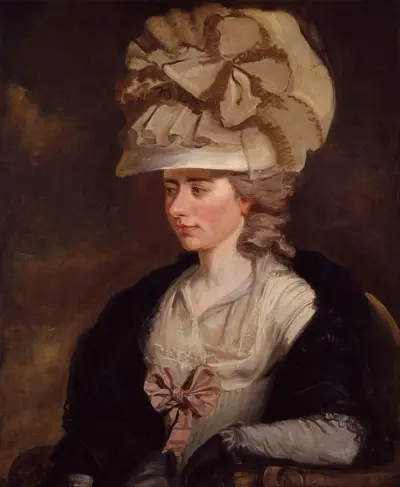
Frances Burney, also known as Fanny Burney and later as Madame d'Arblay, was an English satirical novelist, diarist and playwright. Born in Lynn Regis, now King's Lynn, England, on 13 June 1752, to the musician Dr Charles Burney (1726–1814) and his first wife, Esther Sleepe Burney (1725–1762), she was the third of her mother's six children. She began her "scribblings" at the age of ten. In 1786–1790 she held an unusual courtier appointment as "Keeper of the Robes" to Charlotte of Mecklenburg-Strelitz, George III's queen. In 1793, aged 41, she married a French exile, General Alexandre D'Arblay. Their only son Alexander was born in 1794. After a long writing career, and travels in which she was stranded in France by warfare for over ten years, she settled in Bath, England, where she died on 6 January 1840. Of her four novels, the first, Evelina (1778), was the most successful, and remains the most highly regarded. Most of her plays remained unperformed in her lifetime. She also wrote a memoir of her father (1832) and many letters and journals, which have been gradually published since 1889.
