Sarah Moore Grimke Quotes
Thus far woman has struggled through life with bandaged eyes, accepting the dogma of her weakness and inability to take care of herself not only physically but intellectually. She has held out a trembling hand and received gratefully the proffered aid. She has foregone her right to study, to know the laws and purposes of government to which she is subject. But there is now awakened in her a consciousness that she is defrauded of her legitimate Rights and that she never can fulfill her mission until she is placed in that position to which she feels herself called by the divinity within. Hitherto she has surrendered her person and her individuality to man, but she can no longer do this and not feel that she is outraging her nature and her God
Sarah Moore Grimke, 1792-1873, Abolitionist & Feminist, 1857
Sourced by: Eigen's Political and Historical Quotations


This statement is referring to the custom of women covering their eyes whenever a man who they did not know passed them. Turks did not ever use Burkas the way some other Muslim countries do, but they wore headscarves and covered their eyes when a strange man appeared. This was a shocking statement in a sexist Islamic culture. Although the process of modernization and reform in Turkey was relatively bloodless, Ataturk was prepared to and did use force to defend it. This and many others made the role of women not only uniquely equal in the Islamic world, but women were suddenly elevated to the level of most Western nations and in voting rights were ahead of most. He used his own family to set an example. See {584503}.


The deed was made out in the name of her husband followed by the phrase “et ux”. That is a legal abbreviation for “et uxor” which literally means “and wife”. It was in use in English and American law from the time that married women had no right to property and the wife was a mere appendage to the husband. It is still recognized as a proper form by the law of many states.
He was very conservative in almost all things, but here and with poverty (see {638805}) he was far ahead of his time.


This is the earliest surviving attempt of the Romans to formulate a legal code.

Some men in the audience hissed as she took the podium.

A Polymath is a genius in a number of different subjects. She learned her mathematics initially by listening in on her brother’s tutoring sessions. She published in mathematics, geography, physics, astronomy, and biology. Although her first husband was totally unsupportive as indicated in the quotation, after his death, her second husband was a great asset to her and assisted her in many ways.

An “asp” was the term Greeks and Romans used for a poisonous snake. Menander was a very popular playwright 300 years before the birth of Christ. His phrase was not a new idea at the time but, common wisdom” among Greeks—including many women who were controlled by the social values of the day that were very sexist. However, when Menander wrote it, it received mass distribution in that plays were the major form of mass media and entertainment at the time. So this conventional wisdom was common as Rome became the superpower and whose culture dominated including the Greek plays. Note that this attitude did not reflect the point of view that women were not important enough to educate to write. To the contrary, the implication is that women were too potentially dangerous to allow them to learn to write. Upper class women however were expected to read, but men were not only taught to write but to do so persuasively.


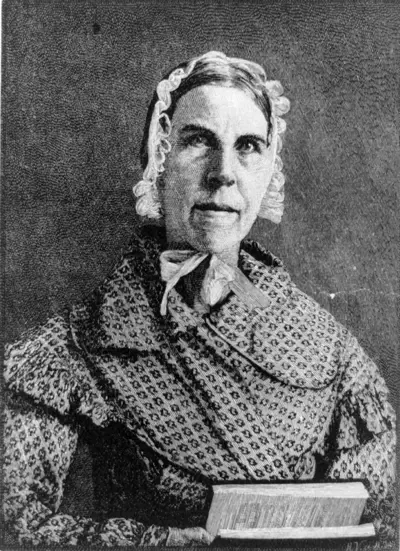
Sarah Moore Grimké was an American abolitionist, widely held to be the mother of the women's suffrage movement.:xxi Born and reared in South Carolina to a prominent, wealthy planter family, she moved to Philadelphia, Pennsylvania, in the 1820s and became a Quaker, as did her younger sister Angelina. The sisters began to speak on the abolitionist lecture circuit, joining a tradition of women who had been speaking in public on political issues since colonial days, including Susanna Wright, Hannah Griffitts, Susan B. Anthony, Elizabeth Cady Stanton, and Anna Dickinson. They recounted their knowledge of slavery firsthand, urged abolition, and also became activists for women's rights.
