Nicholas M. Butler Quotes
Why you might just as well put poison in the food of every American boy that goes to his transport as to permit that man to talk as he does.
Many politicians were outraged at Senator Robert M. La Follette's speeches at the beginning of World War I:
Nicholas M. Butler, 1862-1947, President, Columbia University, Nobel Laureate in Peace, Republican Party Leader, Speech, American Bankers Association, Quoted in New York Times, September 28, 1917
Sourced by: Eigen's Political and Historical Quotations


Although it seems incredible to us today, thousands of people were arrested and prosecuted under the Espionage Act. The government particularly targeted leftists such as Eugene V. Debs, Bill Haywood, J. Philip Randolph, Victor Berger, John Reed, Max Eastman, and Emma Goldman. Debs was sentenced to 20 years in prison for criticizing the Act itself.

Facebook was the most aggressive of the Social Media Web companies at the time in censoring any material that glorified terrorism or terrorist organizations. The problem of course, was the First Amendment rights of the web users to publish and read what they choose. But private firms are not covered by the Bill of Rights—only the government. See {583142} for the message some authorities believed was being transmitted.

In WWI Congress had passed a law that prohibited anyone from undermining or interfering with the war effort. The defendants had passed out anti-war literature to young men heading for military service. The court then overlooked the First Amendment and came up with a strange logic where the “clear and present danger” was the test of whether the First Amendment would apply. The anti war pamphleteers went to jail. Today, we look back on this and find it very surprising but this is yet another example of erosion of freedom and civil liberties when the nation is at war. By the 1950s, the Supreme Court had reversed itself and the First Amendment was restored to its original intent.

This had been a general, bipartisan principle from WWII through the Gulf War, but in the War on Terrorism, President George W. Bush and his administration deviated from the traditional American view and accused those who were criticizing their counter terrorism of aiding and abetting the enemy and attacked the loyalty and patriotism of their critics.


The American Founding Fathers were aware of Sidney and others who were executed for what they said about the King and the government. Hence, the First Amendment. However, John Adams passed the Alien and Sedition Acts which turned criticism into treason. It was repealed later and would probably have been declared unconstitutional if it had not been repealed. However, during the First World War, critics were also jailed. Eugene Debs, a Presidential Candidate, served several years in jail until pardoned. He had opposed the war and the Draft of soldiers. Freedom of Speech and Treason have been in contention whenever the nation might be at war or in a crisis. Supreme Court decisions may have put an end to future American censorship efforts of this kind.

Islamic modernists like Serageldin are many among the educated Muslims but their views are often drowned out by the violence and extremist statements of the fundamentalists. This quotation is similar to statements by American Supreme Court Justices but surprises us when coming from a Muslim. But there are many who are as much committed to freedom of speech as most Americans. Even in America, some politicians have tried to make incitement a crime. John Adams’ Alien & Sedition Acts and laws of WWi are examples. However, in no Islamic nation have reformers had incitement removed as a crime as of 2011.

Samuel Langhorne Clemens, 1835-1910


We were in the midst of WWI.

America was entering the First World War as a combatant but there was considerable anti-war sentiment. The Wilson administration over-reacted and instituted many repressive laws and regulations. Leading Americans like Eugene Debs was jailed for several years simply for opposing the war and the military conscription that went with it. Our scientists were not allowed to receive German scientific journals which of course hurt us and not the Germans who read their research and ours.


by recent Southern military losses Ironically, it was the Southern States and Southern politicians who had ever since President Andrew Jackson, illegally appropriated most of the Indian lands. It was the Supreme Court who ordered Jackson not to remove the Cherokee, but he and the other Southerners did so anyway with mild protest coming from the North. Neither section treated the Indians fairly, but the South had been much worse.


There was much similarity between the methods of the Nazis in Germany and the IRA in Ireland at that time. However, their objectives and philosophies were totally different. Like the Nazis, political opponents were “traitors”.
The Barbary Pirates had an incredible extortion racket going in the Mediterranean. If nations would pay them an annual sum each year, they would not attack and seize merchant ships of that country and sell the ships and goods while holding the sailors for ransom.


He was leading the Gordon Highlanders of the British Army against the Boers during the Boer War. He was seriously wounded and could not go on himself with a charge he had ordered, However, waifing his sword he made this famous qutation. Particualrly noteorthy is the derrogatory terms which he used to describe the enemy--the Boers of South Africa. In many wars and cultures, one or more of the combatants, in order to overcome the avarage soldier's reluctance to kill an enemy, characterizes them as less than human. In this case, vermin, who were to be exterminated. There were two predominant groups of whites who came to South Africa, the English who were generally well-educated and were interested in trading with the exhisting inhabitants and investing in businesses using mostly native labot and the Boers. The latter were of Dutch and German origin, poor farmers with little or no land in the home country and little education. Their interest was to create a nation where they could own land to farm. And the lest expensive way for them to increase their farmland was to sieze it from the native Blacks and who were the major forces behind the racial discrimination which became apartheid. The British contolled the government and sought stability and as in most of the British Empire, they wanted English law to prevail including the rights of the Black natives. The Boers had left Europe for good and would thrive or not in Southern Africa. Proportiopnately, the English might have a career in South Africa or serve there for a few years. They were Englishmen in a foreign country. The Boers saw themselves as citizens of Southern Africa who were fighting the native Blacks for control of the land. The English legal system would not allow any of the land seizures and political discrimination that the Boers saw as existential for their survival in Africa. Soon, the Boers took more and more of the law into their own hands and saw English rule and dmination as inimical to their interests in Africa and they tried to create their own independent states in Southern Africa. That was the essense of the Boer Wars. Dick-Cunyngham was awarded the Victoria Cross, the highest military decoration of Great Britain, for his exploits in the Afghan War.
_0_thumbnail_47x47.jpg)
He was countering the argument of unlimited free speech advocates that fascist hate speech should not be countered by more speech on teh other side. Historically, he observed, that Fascism has only been defeated by force and control.
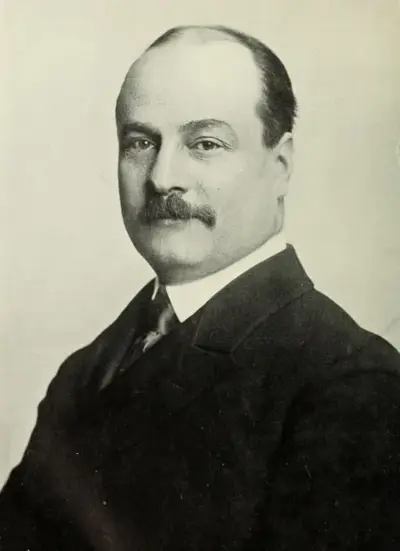
Nicholas Murray Butler was an American philosopher, diplomat, and educator. Butler was president of Columbia University, president of the Carnegie Endowment for International Peace, a recipient of the Nobel Peace Prize, and William Howard Taft's running mate in the 1912 United States presidential election. He became so well known and respected that The New York Times printed his Christmas greeting to the nation every year.
