New York Post Quotes
Freedom of speech, freedom of the press, academic freedom, freedom of conscience—these are noble and inspiring phrases; as symbols of causes they are worth fighting for and dying for. The more pity that they should be invoked so often these days in behalf of those who abuse their freedom to the injury of their country's cause. When peace comes, freedom will be as regnant in American life and thought as ever before. But in the meantime, they are not helping the cause of freedom who are using it as a cloak to conceal disloyalty.
We were in the midst of WWI.
New York Evening Post, Editorial, 1917
Sourced by: Eigen's Political and Historical Quotations

This was a decade before the Constitutional Convention in Philadelphia. You can imagine the distress of Vermonters when the U. S. Constitution was written with no provision for absolute freedom of speech which they had had for a over a decade. They would not ratify the U, S, Constitution without the understanding that there would be a Bill of Rights added with the First Amendment.


This language is from the earlier version of the Constitution passed in the middle of the 19th century.

Arguing agaist libel and sedition prosecutions:

The Adams administration had passed the Alien and Sedition Acts which severely curtailed freedom of speech and of the press despite the First Amendment which clearly prohibited that.


America was entering the First World War as a combatant but there was considerable anti-war sentiment. The Wilson administration over-reacted and instituted many repressive laws and regulations. Leading Americans like Eugene Debs was jailed for several years simply for opposing the war and the military conscription that went with it. Our scientists were not allowed to receive German scientific journals which of course hurt us and not the Germans who read their research and ours.

In WWI Congress had passed a law that prohibited anyone from undermining or interfering with the war effort. The defendants had passed out anti-war literature to young men heading for military service. The court then overlooked the First Amendment and came up with a strange logic where the “clear and present danger” was the test of whether the First Amendment would apply. The anti war pamphleteers went to jail. Today, we look back on this and find it very surprising but this is yet another example of erosion of freedom and civil liberties when the nation is at war. By the 1950s, the Supreme Court had reversed itself and the First Amendment was restored to its original intent.


Although it seems incredible to us today, thousands of people were arrested and prosecuted under the Espionage Act. The government particularly targeted leftists such as Eugene V. Debs, Bill Haywood, J. Philip Randolph, Victor Berger, John Reed, Max Eastman, and Emma Goldman. Debs was sentenced to 20 years in prison for criticizing the Act itself.

The evils of the time were even worse than in modern times. Most newspapers, journals, and periodicals were in 1835 actually owned and operated by political parties or people totally identified with political parties. In modern times, there are publications and blogs which are controlled by political forces, but most are not.
In this famous case the unanimous court allowed the conviction of pacifists who wrote a pamphlet saying that the military draft was unconstitutional and wrong. The logic was that there was an immediate “clear and present danger” to the nation and therefore the usual Constitutional protections did not apply.

Note how the second paragraph nullifies the first of the government declares an emergency. This is a trick that is very common in constitutions.

There was much similarity between the methods of the Nazis in Germany and the IRA in Ireland at that time. However, their objectives and philosophies were totally different. Like the Nazis, political opponents were “traitors”.


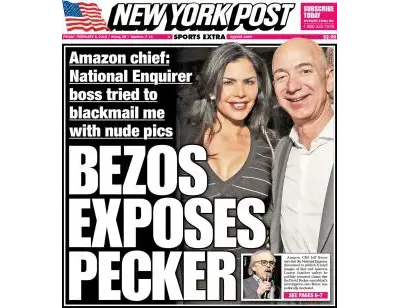
The New York Post (sometimes abbreviated as NY Post) is a conservative-leaning daily tabloid newspaper in New York City. The Post also operates NYPost.com, the celebrity gossip site PageSix.com and the entertainment site Decider.com.
