E. M. S. Namboodiripad Quotes
Why and how did our country fall from its brilliant antiquity to the degradation of pre-British days? The answer is that defeat of the oppressed castes at the hands of the Brahminic overlordship, of materialism by idealism, constituted the beginning of the fall of India’s civilization and culture which in the end led to the loss of national independence.
First non-Congress Party governor of an Indian State (Communist)
E. M. S. Namboodiripad, 1909–1998, Indian historian, political and social commentator, Chief Minister (Governor) of the Indian State of Kerala, History, Society, and Land Relations, 2010
Sourced by: Eigen's Political and Historical Quotations

He saw great similarities between the terrible Indian Caste system and the different socio-economic classes of the West. Brahmins are the high caste Indians and the Sudras are low caste.

They were the “untouchables”. Under English rule and law, they had more opportunity, equality and protection than ever before. They opposed the idea of home rule and passing rule to an Indian parliament and ministers as ol the upper castes would dominate and control the government and would discriminate against them as they had always done before English rule. What they worried about came of to pass, but the Congress Party which dominated much of Indian politics was opposed to the Caste system and went out of their way to make it illegal and to institute affirmative action. However, regardless of the law, the Cast System still exists, and the discrimination is a current problem for India and the untouchables.

Paz was the Ambassador to India. The caste system in India was outlawed by the Indian Constitution, and the government has made many effort at affirmative action to eliminate it put as Paz observed it is so ingrained in Indian tradition, culture and religion that it continues to persist.

The traditional Hindu social structure established castes – levels of society with Brahmins at the top and untouchables at the bottom. When India gained independence, the caste system was made illegal. Nonetheless, it is still followed by hundreds of millions of Indians. Religiously the Buddhists and the Hindus have had different philosophies. Ilaiah is a Buddhist who opposes the traditional Brahmin social structure and is a supporter of “Dalitization” – a change in the Indian culture to make the Dalits (untouchables) equal de juro and de facto.

Manava Dharma Shastra. The caste system in action. Note however that the highest caste aristocrats could not abuse even lower caste women with impunity the way that was common in early Christian Europe. However, the punishment was not death as required by Muslim law—see {590409}. This text is a part of the Hindu Holy Texts. Hindus believe that Manu was a prophet whose text is revealed or inspired.
Manava Dharma Shastra. The Hindu caste system is one of the most brutal and rigid forms of discrimination in human history. It is interesting to note that even the lowest cast people—the “untouchables”—were thought worthy of being witnesses. In early America, in many places Native Americans and Blacks were not considered fit to be witnesses even though they were free and not slaves. This “liberality” did not apply to women however where even the highest caste was not considered fit for the function. This text is a part of the Hindu Holy Texts. Hindus believe that Manu was a prophet whose text is revealed or inspired.

This novel won the Booker Prize—one of the great achievements in literature.

First non-Congress Party governor of an Indian State (Communist)

Many Indians follow a rigid caste system where all people are born and divided into 5 social castes which are immutable—there is no caste mobility. An “untouchable” –the lowest Indian Caste—even if he make a million dollars—is still an untouchable and the higher casts would have nothing to do with him. Most upper caste people would not allow an untouchable physician to treat him or an untouchable cook to prepare his food. The Caste system is illegal under Indian law, but the majority of the Indians still follow it.

The Caste System has been legally abolished in India yet hundreds of million Indians still follow it.
Paz was the Ambassador to India


Muhammad Ali Jinnah and the other Muslim League leaders wanted to stir up India's Muslims in order to prevent Indian Independence from Britain unless India were partitioned and the Muslims could have their own nation. At that point the British and the Congress Party of India—the majority political party were both starting to plan for independence. Jinnah and most of the Muslim nationalists did not want to have Muslims in a Majority Hindu nation. To stop it, they first used fear to try and separate the many Indian Muslims who were politically active from their roles in and loyalty to the Congress Party which although Hindu dominated had Muslim members and officials. All the Muslims who were literate were aware of the terrible revelations of the Nazi Concentration Camps and the attempted extermination of all the Jews of Europe. The "party line" of the Muslim League was that once the British turned the government of India over to the Congress Party, they would turn on the Muslims and exterminate them so that India would be all Hindu. There were no such plans or even suggestions be anyone in the Congress party, the paranoia and the conspiracy theory resonated with many Indian Muslims just as conspiracy theories are believed by some people in every society. In this case, the paranoia that was unleashed by the Muslim League would have tragic consequences as with Independence getting closer many Muslims struck out and preemptively attacked and butchered Hindus and Sikhs who retaliated in kind and the butchery went on all through the Independence process and the partition of India to create a Muslim state—Pakistan. Almost 2 million people would be murdered in the sectarian violence that was unleashed.

This famous quotation, from this important address, at such a critical time in history has been admired for years. Despite his great oratory, the next months were to see almost 2 million Indians of all faiths killed in what was probably the worst internecine violence in human history. Ironically, the politically motivated terrorism had stopped since all the decisions had been made. The motivation for the frightful atrocities that took place from then on was vengeance and fear of more vengeance." 1st Earl Mountbatten of Burma


Officially the caste system has been abolished by Indian legislation, and the Brahmins have no more legal rights or authority than any other people. Yet culturally, they maintain an attitude of superiority, and dominate what they refer to as the lower casts to the degree that they can. In this quotation, a major Brahmin organization was trying to secretly organize Brahmins to resist the political consciousness raising that was ongoing in the lower casts of the area. Class reform in India is very difficult because cultural tradition is often more controlling than law. And legal rights must be exercised for them to be meaningful.
Manava Dharma Shastra. In the Hindu caste system, the highest caste was allowed to vigilante justice while the other castes had to go through the king and his magistrates. This text is a part of the Hindu Holy Texts. Hindus believe that Manu was a prophet whose text is revealed or inspired.
Manava Dharma Shastra. The Hindus believe in reincarnation and that the souls of animals move up the ladder and if they are good are eventually born as humans (Sudras). These are the lowest caste in this terribly discriminatory system—the “untouchables.” But if a Sudra lives a pious life and accepts his lot, he is reincarnated as a higher cast human (twice born). This law illustrates the incredible discrimination that the cast system produced. In modern India, the caste system is illegal and there is no discrimination in law or by government. However it is still terribly evident in social life, marriage, employment and most phases of Indian society. This text is a part of the Hindu Holy Texts. Hindus believe that Manu was a prophet whose text is revealed or inspired.
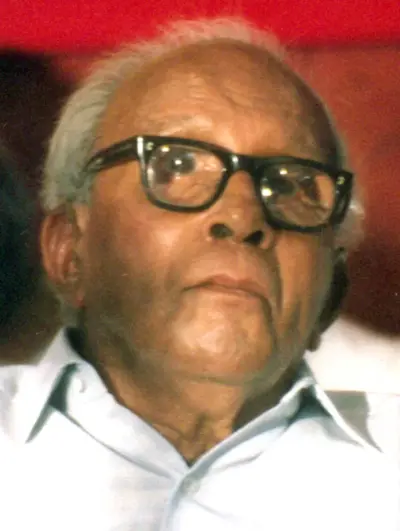
Elamkulam Manakkal Sankaran Namboodiripad, popularly EMS, was an Indian communist politician and theorist, who served as the first Chief Minister of Kerala in 1957–59 and then again in 1967–69. As a member of the Communist Party of India (CPI), he became the first non-Indian National Congress chief minister in the Indian republic. In 1964, he led a faction of the CPI that broke away to form the Communist Party of India (Marxist) (CPI(M)). He completed his graduation from St. Thomas College, Thrissur.
