William Colby Quotes
While the war is by no means over, my Soviet or Chinese counterpart's report must exhibit great concern over the Viet Cong's mounting problems and the steady improvement in the ability of both the South Vietnamese and the Americans to fight a people's war.
Colby was then the CIA Station Chief in Saigon. This is just one of the many memos and reports that were issued by the CIA and the Defense Department giving a positive picture of American success in the war effort. While some of these false reports were the results of optimism and wishful thinking, most were out and out fabrications. Colby, later when he became CIA director, lied and broke the law, continuing this pattern. See {62151}.
William Colby, 1920-1996, Director, U. S. Central Intelligence Agency, Report to The White House at the height of the Vietnam war
Sourced by: Eigen's Political and Historical Quotations

This was a training manual for the conduct of Guerrilla wars in general and the Contra insurrection in Nicaragua.


Clark had commanded the American and NATO forces in the Serbian War where all the military and political objectives were accomplished with heavy losses to the Serbian’s and none to the allied side—what many think was the most successful war in American History. Like Eisenhower in WWII one great challenge for Clark was the political and strategic one of keeping the coalition of all the allied governments working together. His perspective had been like Eisenhower’s and other officer’s perspectives in history, which was much wider and geopolitical than the views of most military officers.

Chomsky was not asserting this statement as the truth. He was making the statement assuming that the absurdity of it would be clear to the listener and they would also realize that was what the then government policy was. North Vietnamese had infiltrated the South and had much support in many of the South Vietnamese villages. When the U. S. bombed the North Vietnamese—and the Vietnamese inhabitants—of those villages, the intention was indeed to help the South Vietnamese. If Chomsky were a politician running for office, his opponent might well have taken this quote and used it to “prove” that Chomsky supported the American effort in the Vietnam War when he was a vehement opponent.


sending American troops to Vietnam


Calley was the officer who gave orders to kill men, women and children of My Lai, a Vietnam village which Army intelligence felt had been sympathetic and given help and assistance to the Viet Cong. Calley was convicted by Court Marshall, but was released after serving a very light sentence. No one above Cally was held in any way responsible.

The Muslims had internal wars but they had—and still have--two sets of morality as to the laws of war. This illustrates the classic Islamic discrimination against non-believers to which the minority of Muslim terrorists still adhere,

Up to that time U. S. policy was to provide training and assistance to the South Vietnamese government and military, but not to attack the North. America had backed a corrupt and incompetent South Vietnamese government and Bundy and other policy makers were convinced that the North Vietnam would win, if the fighting and governing were solely left to the South Vietnamese. Johnson, who had resisted this policy for several weeks finally acceded. It was a major escalation of the Vietnam War.

This issue has vexed American in every war in which the nation has been engaged. Lincoln’s policy, herein stated, has always been the American policy, yet it has caused the same dissatisfaction and complaint over and over. No one has found an alternative to have a remedy for the evil of harboring terrorists, spies, insurgents, whatever they are called.

He was a realist who foresaw that even though the South had been militarily defeated, there were those who would persist in their efforts to retain slavery or a de facto form where freedom is the form but subjugation was the substance. It would be Jim Crowe and terrorism in the form of the KKK and a successor to Lincoln who was very sympathetic to the aims and culture of the Southern Rebels.
The U. S. was evacuating all its forces and agents as the Viet Cong overran Saigon. This ended the Vietnam War. The CIA, had been telling the President and the National Security Staff that the Army reports were exaggerated and we were not faring well in the Vietnam War. Events proved them right. Their earlier track record, especially with President Nixon was very poor in intelligence analysis and prediction. See {634511}, {634509}, and {634503} for Nixon’s view of the CIA.

When McNamara was itemizing the list of dangers with the Joint Chiefs’ Cuban invasion plan, McGeorge Bundy told the not to forget the possibility of a nuclear exchange. The Joint Chief’s plan and recommendation was to invade Cuba, which could have been accomplished with relative military ease they thought. However, they had not gone the next steps and had no planned responses to the various possible Russian responses. The Chiefs of Staff were senior battle hardened WWII and Korean War veterans whose tactical knowledge and leadership was as good as there was. However, none of the had any experience or training with the strategic aspects of military planning the way senior military officers did in the next generation of military leaders. The civilian leadership had to put the breaks on the Joint Chief’s notion of simplistic invading Cuba.
The “constraints” include an unwillingness to use atomic, chemical and biological warfare; no torture; execution or assassination of all insurgents possible; killing and intimidation of civilians; due process.

Komer, Wesmoreland, and the Military Command in Vietnam had been lying about American success in the Vietnam War. The CIA analysts (see {634522}) had figured out that if the Westmoreland numbers of enemy killed were correct, there would have been almost no young men left to fight in North Vietnam, and yet their military was as large and strong as ever. The CIA director sent Carver to Saigon to tell Komer and Westmoreland that CIA was about to issue their findings. Komer was an ultra-hawk, known as “Blowtorch Bob”, who had personally sent many memos to the White House reporting that we were winning in Vietnam and the only question was how soon we could attain total victory. For his work in Vietnam, he was made Ambassador to Turkey. He was awarded the Presidential Medal of Freedom by LBJ. Some critics believe that Johnson’s after Vietnam treatment of Komer was to assure his silence as he knew everything about the deception and was a major perpetrator of it. Discipline for lying was out of the question with someone who knew all that Komer did.

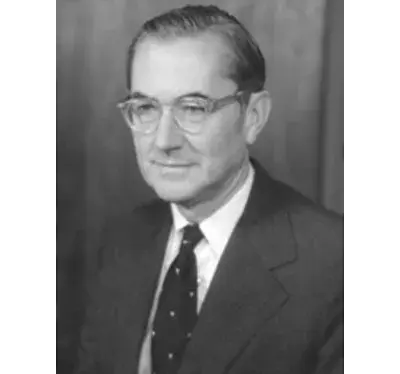
William Egan Colby was an American intelligence officer who served as Director of Central Intelligence (DCI) from September 1973 to January 1976.
