Lyndon B. Johnson Quotes
Our objective in South Vietnam has never been the annihilation of the enemy. It has been to bring about a recognition in Hanoi that its objective - taking over the South by force - could not be achieved.
Johnson, Lyndon B. "Address to the Nation Announcing Steps To Limit the War in Vietnam and Reporting His Decision Not To Seek Reelection." Public Papers of the Presidents of the United States: Lyndon B. Johnson, 1968-69, Volume I, Government Printing Office, 1970, p. 470.


Later, when he ran for the Democratic Presidential Nomination had had changed his mind and was a major opponent of the Vietnam War. This was the pattern of so many Americans whose first instinct was to support the government’s decision to wage war, and over time grew disenchanted with the war and ended up opposing the war actively.


Goldwater had predicted that the LBJ campaign would attack him for some of his warlike and aggressive statements and try and depict him as someone not responsible enough for the Presidency. He was personally convinced that his hard line policies would inhibit Russian aggression. He prepared this and other ads, but the voters were not persuaded and Goldwater was trounced.

Had he signed such a treaty in 1968, he would have been pilloried by the Conservatives of both parties for selling out the interests and principles of the United States and shackling the military before they could win the war. The military was lying about their successes and there were very few. Further, our ally whose government we were protecting from armed revolution was totally corrupt and did not support freedom and democratic values much more than the North Vietnamese Communists did. The Vietnamese in the South had little to fight for unless they were proofing from the corrupt government. There was no possibility that American could have won the war under those conditions. When the Nixon Administration signed the treaty, some of the ultra conservatives objected, but Nixon was a Republican anti-Communist and red baiter and this blunted the opposition of the bulk of the conservatives who were seeing a more realistic view of the war. The liberals who hated Nixon, however, supported him on this matter which was then their most important issue.


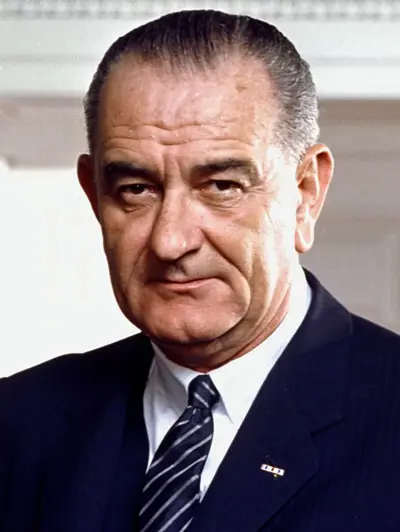
Lyndon Baines Johnson, often referred to by his initials LBJ, was the 36th president of the United States, in office from 1963 to 1969. He served as the 37th vice president from 1961 to 1963 and assumed the presidency following the assassination of President John F. Kennedy. A Democrat from Texas, Johnson was also a United States representative and later majority leader in the United States Senate. Johnson is one of only four people to have served, at various times, in all four federal elected positions.
