Oliver Wendell Holmes Jr. Quotes
While property may he regulated to a certain extent, if regulation goes too far it will he recognized as a taking.
Oliver Wendell Holmes Jr., 1841-1935, U. S. Supreme Court Justice, Pennsylvania Coal Company v. H. J. Mahon, 1922
Sourced by: Eigen's Political and Historical Quotations


While this principle is widely accepted in modern America, in the early 20th century this was a view considered radical, socialist and even communistic by many of the leading businessmen in the nation. For a president to utter these words, much less a Republican President of a rich, upper class background.


In 1905 President Roosevelt supported a Pure Food act. Business interests opposed it with such arguments as:

To the modern reader utterances such as this from a Conservative Prime Minister seem astounding. However, the Great Depression existed in Canada as well as the United States, and Franklin Delano Roosevelt was not the only world leader who would reach the conclusion that business and capitalism must be profoundly regulated and the system changed if it was to be saved.


Stopping the FCC from challenging broadcast licenses for programming-related deficiencies:


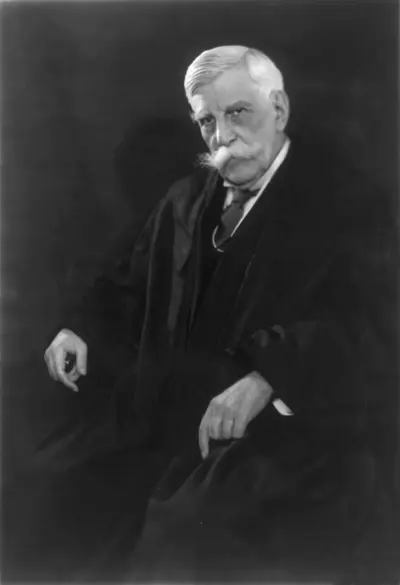
Oliver Wendell Holmes Jr. was an American jurist who served as an Associate Justice of the Supreme Court of the United States from 1902 to 1932. Noted for his long service, concise and pithy opinions, and deference to the decisions of elected legislatures, he is one of the most widely cited United States Supreme Court justices in history, particularly for opinions on civil liberties and American constitutional democracy, and is one of the most influential American common law judges, honored during his lifetime in Great Britain as well as the United States. Holmes retired from the court at the age of 90, an unbeaten record for oldest justice in the federal Supreme Court (although John Paul Stevens was only 8 months younger when he retired on April 12, 2010). He previously served as an Associate Justice and as Chief Justice of the Massachusetts Supreme Judicial Court, and was Weld Professor of Law at his alma mater, Harvard Law School.
