A. Ernest Fitzgerald Quotes
When things are going well, the companies stress the idea of free enterprise, with no need for government regulation. But when things aren’t going well, they suddenly become a close partner with the government and want it to bail them out. All they have to do is threaten to collapse and the government pours in more money.
In 1968, Fitzgerald reported a $2.3 billion cost overrun in the Lockheed C-5 aircraft program. As a congressional witness before the Joint Economic Committee, he rejected the advice of Air Force officials to not tell the truth and testified with candor and transparency about billions of dollars in avionics program cost overruns and other technical problems enormously embarrassing the Defense Department and the Nixon Administration procurement practices. In response to Mr. Fitzgerald’s testimony, President Richard M. Nixon directed that he be fired. See {636749}.
A. Ernest Fitzgerald, DOD Senior Executive Service Management Systems Deputy, Air Force Auditor, Whistleblower about Defense Contractor Fraud, Quoted in Barry Ritholtz, Bailout Nation, 2009
Sourced by: Eigen's Political and Historical Quotations

The “folks” were private corporations want to run schools and have won some contracts to operate Charter Schools. They argue that the free market should prevail when it comes to education and schools should not necessarily be run by local governments. Corporations should be given a chance in a “free market.” However, as Molnar observes, there is more than a little hypocrisy in the these educational corporations totally depend on public, tax dollars for the existence. Ironically, there is a sound market for elite private schools which are in a free market which are funded with private money. However, these educational corporations have chosen NOT to compete in this private arena. They only want public money. Critics argue that they are not very good at operating schools but are quite skilled at politically obtaining taxpayer money. So far there is no data from objective studies which shows that these educational corporations can operate better or less expensive schools.


This Republican mantra has been central for the Republicans for the entire century after Theodore Roosevelt who thought that business had to be regulated and controlled. The same basic speech has been given by conservative Republicans ever since.

See {641989} & {641989} for more on the Radio Channel corrupt giveaway.


He had just retired after 24 years in Congress.


During The Depression although business in general was doing very poorly, there were a few which had grown immensely powerful and abused the power as there was little or no regulation at the time.


He and others believe that no matter what regulatioms government officials might impose, Wall Street, the banks and financeers will find a way around the reulations.


This extreme view of regulation is one of the many views that caused the Nevada voters to reject her.


This quotation illustrates one of White’s correct early grasps of what was happening in the political economy of the time and its future direction with growing industrialization and technological complexity. Most historians agree that White passed classified information to the Russians. He was accused of being a Communist, but there was never any evidence of that. Some people believe that he was a spy for the Russians and committed espionage, but others disagree observing that White was very much his own man and felt that much information that was classified never should have been. White substituted his own judgment, it is believed, about what could be given to the Russians for the security system. He was an admirer of what Russian socialism had accomplished economically, educationally and medically since the 1917 revolution deposing the Czar. Russia had been a valuable military ally, which had taken the brunt of both military and civilian casualties in WWII. White’s economics were certainly not Marxist but very much Keynesian. He was subpoenaed by the House Un-American Activities Committee where he was accused of being a Communist which he denied (see {634907}). He died of a heart attack 3 days later.


The “regulation” to which Franklin objected was not the type of regulation we have today. It was generally limited to the granting of monopolies to individuals or their companies if they would institute a service that was perceived as beneficial by the public as a whole. For example, a company might build steamboats and provide regular service across a river or along it. The company would argue that the initial cost and investment is so great, that they are entitled to a period of protection so that they can be sure of getting their investment back. In most cases, they would have made the investment, monopoly or not, and in many cases the public officials are unsophisticated and make a bad deal; in others there was (and is) outright corruption. Countries like Norway, have been so burned by the problem Franklin observed, that they try to avoid even government monopolies of service. They for example, have private and public light rail commuter lines which continuously compete against each other.


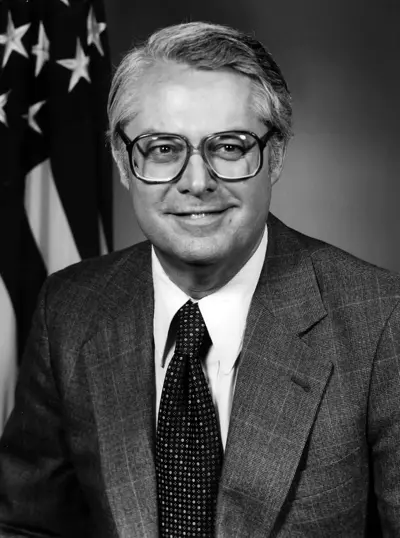
Arthur Ernest "Ernie" Fitzgerald was an American engineer, a member of the Senior Executive Service in the United States Air Force, and a prominent U.S. government whistleblower.
