Benjamin Franklin Quotes
Most regulation of trade is by artful men for private advantage under the pretense of public good
The “regulation” to which Franklin objected was not the type of regulation we have today. It was generally limited to the granting of monopolies to individuals or their companies if they would institute a service that was perceived as beneficial by the public as a whole. For example, a company might build steamboats and provide regular service across a river or along it. The company would argue that the initial cost and investment is so great, that they are entitled to a period of protection so that they can be sure of getting their investment back. In most cases, they would have made the investment, monopoly or not, and in many cases the public officials are unsophisticated and make a bad deal; in others there was (and is) outright corruption. Countries like Norway, have been so burned by the problem Franklin observed, that they try to avoid even government monopolies of service. They for example, have private and public light rail commuter lines which continuously compete against each other.
Benjamin Franklin, 1706-1790, Governor of Pennsylvania, Member of the Continental Congress & the Constitutional Convention, Governor of Pennsylvania, President of the Pennsylvania Assembly, U.S. Minister to France, Postmaster General of the American Colonies, Quoted in Niles Weekly Register, October 23, 1819
Sourced by: Eigen's Political and Historical Quotations

See {641989} & {641989} for more on the Radio Channel corrupt giveaway.


The “rebate agony” referred to a corrupt practice of the Railroads and the Large Monopolies. The railroads charged a very high rate for the transportation of important products like beef and oil. However, secretly they gave back a large percentage of the transportation rate charged to the trusts. They in turn could cut their prices and undersell all the smaller competitors who were paying “full freight” and could not afford to match the lower price. As soon as the smaller competitors were driven out of business in an area, the trust raised its rates even higher than they charged originally. The Railroad had made a small but reasonable profit on the freight of the trusts but they were guaranteed all their business. They also made huge profits on the higher rates that the small companies paid until those companies were driven out of business. Journalists like Ray Baker and Ida Tarbell had uncovered the rebate scheme which enabled the trusts to steal high amounts from the general public through unreasonably high prices. President Theodore Roosevelt was committed to try and regulate the railroads and not allow rebates but charge the same public rate to all with no rebates. Socialists like Sinclair, thought that this attempt would be hopeless—that the damage had already been done, and the trusts now had so much money that they could buy state legislatures and many in Congress to preserve their dominance.

See {642189} where Sherman explained some of the reasons for the law.

Note that in the beginning of the 20th century, the Democrats were the free traders opposing protectionism while the Republicans advocated strong protectionism to protect American companies. By the end of the 20th Century, both parties had flip flopped and taken the other’s position.


This criticism of business has been made ever since by many opposed to protectionism, corporate welfare, subsidies, and bailouts. Yet they get bigger each decade.


While New York City and a few other jurisdictions—states and local—have more stringent laws and ethical standards for politicians than does Congress and Federal Officials, but most have lower standards. In some of the jurisdictions judges can try cases and rule in favor of a company or wealthy individual who gave the judge the money to campaign with and get elected.
At the time, there was generally only a single newspaper in an area in New Zealand.

The Kimberly and Comstock lodes were natural deposits of copper and silver so close to the surface that it required very little work to remove the metal and sell the it.


In 1968, Fitzgerald reported a $2.3 billion cost overrun in the Lockheed C-5 aircraft program. As a congressional witness before the Joint Economic Committee, he rejected the advice of Air Force officials to not tell the truth and testified with candor and transparency about billions of dollars in avionics program cost overruns and other technical problems enormously embarrassing the Defense Department and the Nixon Administration procurement practices. In response to Mr. Fitzgerald’s testimony, President Richard M. Nixon directed that he be fired. See {636749}.


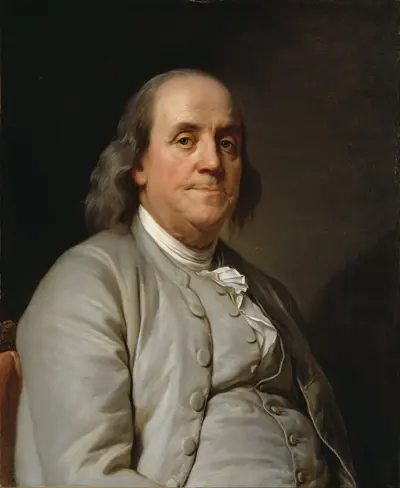
Benjamin Franklin FRS FRSA FRSE was one of the Founding Fathers of the United States. A polymath, he was a leading writer, printer, political philosopher, politician, Freemason, postmaster, scientist, inventor, humorist, civic activist, statesman, and diplomat. As a scientist, he was a major figure in the American Enlightenment and the history of physics for his discoveries and theories regarding electricity. As an inventor, he is known for the lightning rod, bifocals, and the Franklin stove, among other inventions. He founded many civic organizations, including the Library Company, Philadelphia's first fire department, and the University of Pennsylvania.
