Robert H. Jackson Quotes
It is hardly lack of due process for the Government to regulate that which it subsidizes.
Robert Houghwout Jackson, 1892-1954, Chief Prosecutor, Nuremberg War Crimes Tribunal, U. S. Attorney General (Democrat), U. S. Supreme Court Justice, Wickard v. Filburn, 1943
Sourced by: Eigen's Political and Historical Quotations


In 1905 President Roosevelt supported a Pure Food act. Business interests opposed it with such arguments as:


This is a very important historical quotation because it clearly stated the left wing view of regulation. Large Business had been so unethical and illegal at the time that the majority of Americans and Congress, together with a Republican President, thought that it would be good to “weld” the growth and development of large companies to the Government. The right wing saw this as extreme Communism. Over time, when corporate greed and excesses had been controlled by government and was not as prevalent, the inhibition on growth and development of welding corporations to Government was recognized and a period of deregulation followed with most Americans not wanting to allow large companies to be completely deregulated and also not wanting them welded to the government. The extent of regulation has been the political contest with the extreme left and extreme right still holding to their ideological positions and sometimes paralyzing the middle as in the Obama administration.


While this principle is widely accepted in modern America, in the early 20th century this was a view considered radical, socialist and even communistic by many of the leading businessmen in the nation. For a president to utter these words, much less a Republican President of a rich, upper class background.

The Chief Justice refused to accept the previously established legal precedents of other states which would limit considerably the right of the state to regulate corporations. As a result Wisconsin became one of America’s pioneers in regulating corporations which over 25 years later, Theodore Roosevelt was to do for the nation as a whole. The phrase “empire within an empire,” the translation of the Latin that Ryan used, has often been quoted to describe the power corporations had at that time.

To the modern reader utterances such as this from a Conservative Prime Minister seem astounding. However, the Great Depression existed in Canada as well as the United States, and Franklin Delano Roosevelt was not the only world leader who would reach the conclusion that business and capitalism must be profoundly regulated and the system changed if it was to be saved.


This quotation not only illustrates the typical Southern attitude at the time as the issue of Slavery began to be the subject of Federal governmental debate, but it also illustrates the incredible party flip flops over time. Ritchie was one of the leading Democratic Politicians of his day, and it was the Democrats who were opposed to Government. However, people without a knowledge of early American History might think that this quotation came from right wing Republicans of the early 21st century. By then, it was the Democrats who saw the important role of government. The Democrats were then extreme enemies of the Federal Government and were against freedom for Blacks and their rights, that the Republican Party was created and used government more than most Americans ever thought possible, ended slavery and permitted Negro voting and equality. Almost 200 years later it was the Democrats who were espousing the old Republican Views, and the Republicans holding the old Democratic view of government and adopting a more passive view on racial equality and justice.
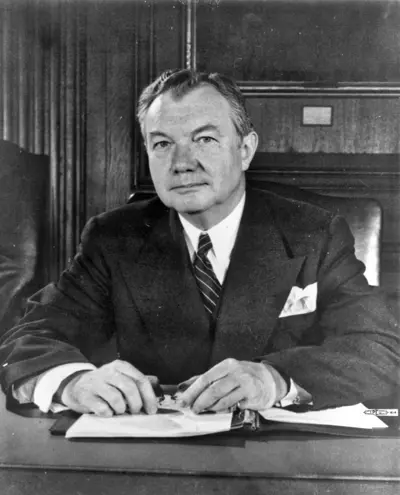
Robert Houghwout Jackson was an American attorney and judge who served as an Associate Justice of the United States Supreme Court. He had previously served as United States Solicitor General and United States Attorney General, and is the only person to have held all three of those offices. Jackson was also notable for his work as Chief United States Prosecutor at the Nuremberg trials of Nazi war criminals following World War II.
