A. P. J. Abdul Kalam Quotes
When I took over as president, I studied the Constitution, and the more I studied it, the more I realised that it does not prevent the president of India from giving the nation a vision. So when I went and presented this vision in Parliament and in legislative assemblies; everyone welcomed it, irrespective of party affiliations.
Kalam, A. P. J. Abdul. Interview. Knowledge@Wharton, 24 Apr. 2008.


The United States government had for many years deposited all its funds in a single private bank, the Bank of the United States. In 1833, President Andrew Jackson, without any congressional authorization, ordered the federal deposits to be distributed among state banks instead. The Senate was furious and passed the first resolution of censure of a President in United States history:. Carried by a vote of 26 to 20. Four years later a pro-Jackson Senate majority voted to expunge the resolution.


This quotation was an attack on President George W. Bush who had argued to a nation hostile about the Iraq War that the decision on whether to continue the war should be determined in large part by the report that was to be given by the commander of our forces In Iraq, General David Petraeus. He reported that he thought we should give the situation some more time and effort, and that was the policy decision. Clark and others thought this was not fair to Petraeus whose job it was not to make the policy but to implement it. It was perhaps the only time in history where a President abdicated a major war policy decision to a field officer. The President even argued to Congress that they should all wait for the General to return to Washington. He argued that he made the decision; he just wanted to hear the General’s recommendation. Most believed that he could have obtained that without the General returning to Washington to talk to Congress and the American people.

He was referring to the President of Egypt in the midst of the Egyptian soft revolution of 2011. Wisner had been asked by the President to tell the corrupt and dictatorial President of Egypt to step down quickly. A few days later, Wisner gave a speech calling for the 30 year Egyptian dictator to finish out his term so he could “steer the changes”. He claimed that he was not speaking for the administration in this speech but it was a personal view. However, the speech created much world confusion as to what the US administration policy actually was. The quotation illustrates one of the problems of conducting diplomacy in a free democracy. A president asks a citizen to represent him; he does, and then turns around and undercuts the very position he was supposed to take. In many counties such an disloyal act would be considered treason but in America there is nothing the administration could do about it, other than to say that the Munich speech was contrary to US policy.


Senators have throughout our history used their power of treaty ratification to encroach on the executive branch and participate in the actual negotiations of treaties. President’s like McKinley to avoid non ratification actually appointed 3 senators to his 5 man treaty negotiating team. The 2/3 super majority is a high hurdle for ratification and presidents have always tilted with the Senate on treaties.


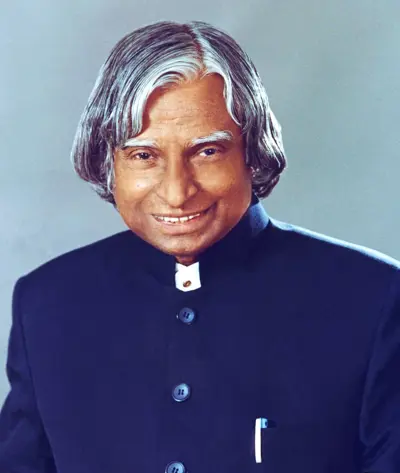
Avul Pakir Jainulabdeen Abdul Kalam was an Indian aerospace scientist and politician who served as the 11th President of India from 2002 to 2007. He was born and raised in Rameswaram, Tamil Nadu and studied physics and aerospace engineering. He spent the next four decades as a scientist and science administrator, mainly at the Defence Research and Development Organisation (DRDO) and Indian Space Research Organisation (ISRO) and was intimately involved in India's civilian space programme and military missile development efforts. He thus came to be known as the Missile Man of India for his work on the development of ballistic missile and launch vehicle technology. He also played a pivotal organisational, technical, and political role in India's Pokhran-II nuclear tests in 1998, the first since the original nuclear test by India in 1974.
