John Jay Hooker Quotes
The Constitution gives the president the power to appoint, upon the advice and consent of a majority of the Senate, and it plainly does not give a minority of senators any right to interfere with that process.
Hooker, John Jay. John Jay Hooker's Blog, 2005.


Most legislative bodies have rules about when and under what conditions a vote is taken. Amendments, procedures, committees all have procedures where votes may be taken that could defeat a nomination or a proposed law but if those defeats fail, there still is not necessarily a law passed or a nomination confirmed. That has to be a separate vote, often called an “up or down vote.” One parliamentary mechanism for opposing a bill or a nomination is to keep voting on amendments and procedures and never have an up or down vote. This is actually true with the vast majority of the laws proposed in both houses of the Congress. Most never do have an up or down vote. Why Gerhatdt and other ask should judicial nominations be different from any law, or any other presidential nomination? Also see {588517} for another factor.


The issue of how the federal judiciary would be selected was one of the more hotly debated issues during the Constitutional Convention.


Senators have throughout our history used their power of treaty ratification to encroach on the executive branch and participate in the actual negotiations of treaties. President’s like McKinley to avoid non ratification actually appointed 3 senators to his 5 man treaty negotiating team. The 2/3 super majority is a high hurdle for ratification and presidents have always tilted with the Senate on treaties.


President Coolidge had nominated Charles Beecher Warren as Attorney General but the Senate with his own party in the majority rejected the nomination as Warren had been closely connected with the Sugar Trust. Coolidge, refused to accept the Senate decision and renominated Warren and threatened that if the Senate would not confirm Warren, be would give him a recess appointment after the Senate adjourned:. The statement was written for a Senate speech but never delivered as such. Warren was rejected by the Senate a second time, and the President indeed offered him a recess appointment, but Warren refused.

This notion seems to have first been expressed by Edward S. Corwin in 1940


The United States government had for many years deposited all its funds in a single private bank, the Bank of the United States. President Jackson, without congressional authorization, ordered the Federal deposits to be distributed among state banks instead. The Senate passed a resolution demanding a copy of the "paper" he had read to the cabinet ordering the change of practice:


See {635809} for an additional view on this act.

President Andrew Johnson had been impeached by the House of Representatives and was being tried in by the Senate. A majority of the Senators voted for conviction but the vote was 1 short of the two-thirds that were needed. Johnson remained in office. These were two of the charges against Johnson. A Century later Presidents commonly did both of these. George W. Bush made reappointment of Senate rejected nominees into an art form but after the Johnson trial, these were never to be considered reasons for impeachment again.


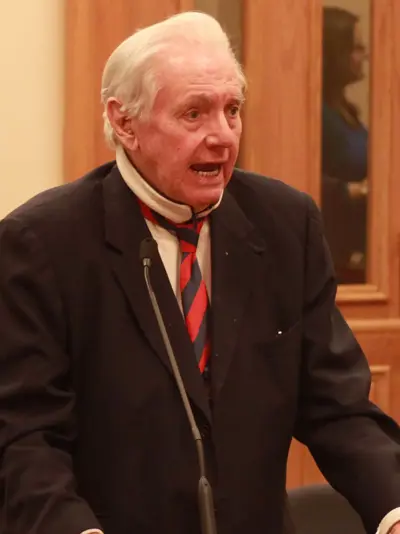
John Jay Hooker, Jr. was an American attorney, entrepreneur, political gadfly and perennial candidate from Nashville, Tennessee, who was the Democratic nominee for Governor of Tennessee in 1970 and 1998.
