George C. Wallace Quotes
When I first ran for governor... I had to stand up for segregation or be defeated, but I never insulted black people by calling them inferior.
Carter, Dan T. The Politics of Rage: George Wallace, the Origins of the New Conservatism, and the Transformation of American Politics. Simon & Schuster, 1995, p. 462.


This quotation was one of the major reasons Carswell was rejected by the Senate.

Jessie Helms was his young assistant who drafted this race baiting ad. There are two vicious but subtle aspects to this kind of attach ads. First, not that the ad does not address the problem of white men working along side of blacks. It only refers to wives and daughter. This interracial sex innuendo played on and increased the fear of whites that Blacks would commonly rape white women. The second nasty aspect of the ad is the specific attack on the opponent. Instead of saying that he favored desegregation, the phrase “mingling of the races” was used which implied that Graham was in favor of biracial intermarriage and children—again another sex innuendo. When integration of the workforce finally occurred in the South, there was no increase in Black men sexually assaulting white women. There has been a substantial increase in racial intermarriage however as racial bigotry has diminished in America.


Moynihan was actually not the political originator of the "benign neglect" phrase which became so controversial. It had been first used by The Earl of Durham in his 1839 Durham Report on the English policy towards Canada.


This was passed AFTER segregated schools had been outlawed by the Supreme Court in Brown v. Board of Education and the 1964 Civil Rights Act had been passed.

Referring to Montgomery Alabama in 1950.


The upper socioeconomic classes are generally less rascist then the lower classes in the United States as well as England and South Africa. The counter argument given by the lower classes are that the upper classes have the money to insulate themselves from the negative aspects of desegregation and the lower class whites have to bear the brunt of desegregation. However, in South Africa, the English of all socioeconomic classes were far less enthusiastic about apartheid then were the Boers. The latter were farmers who wanted the land; the former were traders who could succeed even of the Blacks had their land and were given political rights.
The Quakers were in the forefront of not only the abolition of slavery but of the integration of the races.

Eight years and a Civil War later, he had changed his mind and was the sponsor of the Civil Rights Act of 1866—the first Federal civil rights law in America. See {587711}.

As enlightened and progressive that his views on Blacks were, he was amazingly racist when it came to Native Americans. See {588991}.


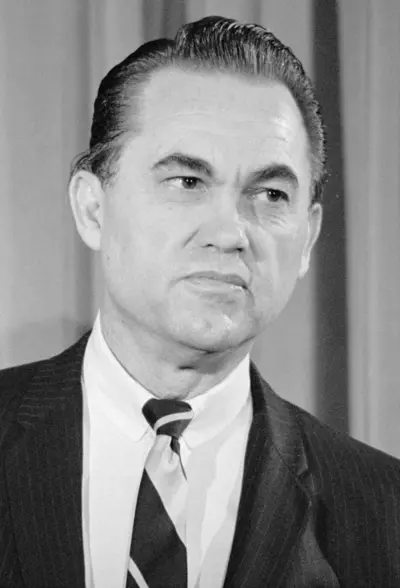
George Corley Wallace Jr. was a politician who served as the 45th governor of Alabama for four terms. A member of the Democratic Party, he is best remembered for his staunch segregationist and populist views. During his tenure, he promoted "industrial development, low taxes, and trade schools". Wallace sought the United States presidency as a Democrat three times, and once as an American Independent Party candidate, unsuccessfully each time. Wallace opposed desegregation and supported the policies of "Jim Crow" during the Civil Rights Movement, declaring in his 1963 inaugural address that he stood for "segregation now, segregation tomorrow, segregation forever".
