Frederick Douglass Quotes
Yet people in general will say they like colored men as well as any other, but in their proper place.
Douglass, Frederick. "Letter to William Lloyd Garrison." 23 May 1846. The Liberator, 26 June 1846.


This was passed AFTER segregated schools had been outlawed by the Supreme Court in Brown v. Board of Education and the 1964 Civil Rights Act had been passed.


Eight years and a Civil War later, he had changed his mind and was the sponsor of the Civil Rights Act of 1866—the first Federal civil rights law in America. See {587711}.

This quotation was one of the major reasons Carswell was rejected by the Senate.

Moynihan was actually not the political originator of the "benign neglect" phrase which became so controversial. It had been first used by The Earl of Durham in his 1839 Durham Report on the English policy towards Canada.


Nixon, in his second attempt to win the Presidency was told by a small group of Southern Republican politicians that his support was wavering in the South. They had already left the Democratic Party in reaction to the Passage of the 1964 Civil Rights Act. They were concerned because in order to try and capture some of the more liberal anti-war Democrats, Nixon had been making speeches advocating the vigerous enforcement of of civil rights and improving the lot of the Negro. But Nixon could not afford to lose his political base inb the south. Hence the promise which did not keep very long after he was elected President. Nixon was not a strong civil rights President, but he was totally without principles and had no political idiology he would sacrifice any of his political capital for. So once he was elected, he didn't want to offend the centerists whose support he needed for his legislatrive program so he did pay lip service to the prinicples of equality when he himself was anti-Black, andti-Semitic and prejudiced in many areas including against intelelctuals.


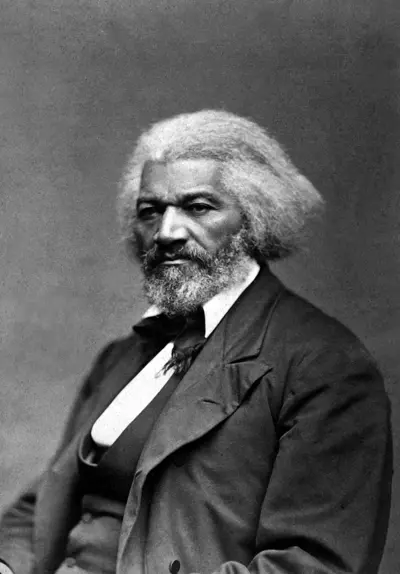
Frederick Douglass was an American social reformer, abolitionist, orator, writer, and statesman. After escaping from slavery in Maryland, he became a national leader of the abolitionist movement in Massachusetts and New York, becoming famous for his oratory and incisive antislavery writings. Accordingly, he was described by abolitionists in his time as a living counterexample to slaveholders' arguments that slaves lacked the intellectual capacity to function as independent American citizens. Likewise, Northerners at the time found it hard to believe that such a great orator had once been a slave.
