Raj Thackeray Quotes
When I fight elections, I don't think about results whether it is assembly or Lok Sabha polls.
"Don't think about results when fighting elections: Raj Thackeray." The Hindu, 30 Sept. 2019.


On election night in 1960 the vice presidential candidate phoned his running mate to discuss the returns:


Sinclair was a writer who had written about some of the worst scandals in American politics, leaned toward socialized democracy, and decided to run as a reform candidate in California where he lived. He won the Democratic primary easily even though he had no money, political experience, or backing. He terrified the Republicans who ran one of the dirtiest campaigns in American History to defeat him spending more money than in any election up to then including the Presidential elections. (for more details see {619613}) Sinclair lost, but it was close.

“Waving the bloody shirt” was a term that some Southerners accused Northern post Civil War politicians of inflaming Northern public opinion by relating incidents of Northerners who wanted to help uphold the equal rights of Blacks in the South and were murdered by the Klu Klux Klan and waving a bloodstained shirt belonging to the dead martyr. There never was an incident that could be documented of actually waving a bloody shirt. But many Northern politicians related events of Southern lynchings and other assaults on Blacks and Whites who were guilty of nothing but claiming lawful rights for Negroes. Northerners who remembered the Civil War and the atrocities and war crimes of Andersonville and Quantrill’s Raiders when they heard these speeches were outraged and angry. This created much anti-Southern attitudes in the North and the West some of which exist to this day.


This is a wonderful historical picture of FDR on his campaign train. Note that the President liked to listen to ideas of many people. Unlike most Presidents he did not have any particular political programs that he advocated in his campaigning. He had no immediate answers to the Great Depression that he had inherited from the Hoover administration. But unlike Hoover, and most Presidents, he was willing to try ideas for which there was no advance evidence of success. If that did not help, he would try something else. He sought ideas from anyone and everyone. His enemies called him a weak leader who had no ideology—no principles but just trying unproven solutions to solve the nation’s critical problems. But it worked and he was elected 4 times—the only President who had served even 3 terms.

Harriman was the senior Democratic leader of the era. Every aspiring Democratic politician would make it his business to get to meet Harriman and try and get his endorsement. However, Carter was not a typical politician and when he decided to run for the Presidency, he had not even met many of the leading Democratic Party leaders. Harriman, a man of the old school, could not believe that anyone in the party who he did not know could possibly have the connections and the sophistication to win the presidency. However, Watergate had seared the American political soul and voters were not looking for a veteran, sophisticated politician. Nixon had been that.


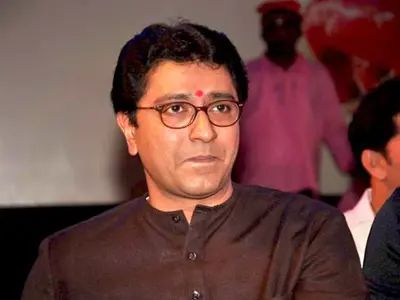
Raj Shrikant Thackeray (born Swararaj Shrikant Thackeray; 14 June. 1968) is an Indian politician and chairperson of the Maharashtra Navnirman Sena (MNS), a regional political party. He is the nephew of Bal Thackeray; and a cousin of Shiv Sena chief and the 19th and current Chief Minister of Maharashtra Uddhav Thackeray.
