John Major Quotes
What happens when there is a conflict between the Scottish parliament, if it was established, and the Westminster parliament? Who is supreme?
Major, John. General Election Campaign Speech, Apr. 1997, Wales.


In the English system the checks and balances of the American system are not present. Historically in England the Monarch and the Parliament acted as checks upon each other. With a Constitutional Monarch there is no institutional check on Parliament. The checks are their restraint--respect for precedent--and the voters. The Prime Minister is a member of Parliament and has no powers other than what Parliament gives him/her. The courts in England are under Parliament and the upper house, the House of Lords is the equivalent of the highest court—but it may always be overruled by the parliament itself.


Mason’s view prevailed. What is interesting is that Mason saw the State as the State Legislature as opposed to the people of the state directly voting for the Senators as we do today.

This is sometimes referred to as the Irish Declaration of Independence.


The majority of the country strongly favored American participation in the League of Nation provided there were some reservations that made it explicitly clear, the American troops could not be committed without the approval of Congress and that nothing would impinge on U. S. domestic sovereignty. Wilson wanted no exceptions or reservations to the treaty he had negotiated and would not compromise in any way. The issues were soon forgotten in what had become a test of will and power between the Senate and the President. The treaty was never ratified and without the United States, the League of Nations collapsed.

Later that year he sent federal troops to Little Rock, Arkansas to enforce a desegregation order.


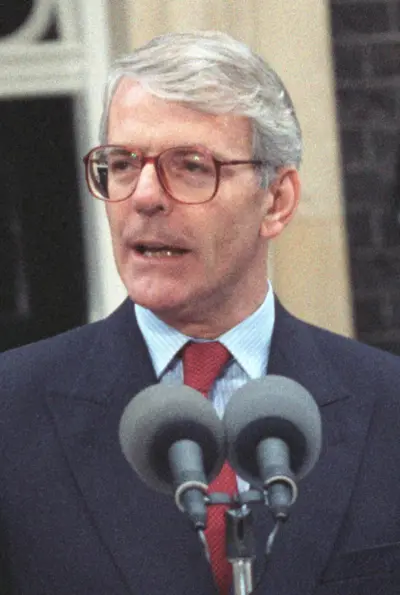
Sir John Major KG CH is a British politician who served as Prime Minister of the United Kingdom and Leader of the Conservative Party from 1990 to 1997. Major served in the Thatcher government from 1987 to 1990 as Chancellor of the Exchequer and Foreign Secretary, and was Member of Parliament (MP) for Huntingdon, formerly Huntingdonshire, from 1979 to 2001.
