Cornelius Vanderbilt Quotes
What do I care about law? Ain't I got the power?


In one of the most blatant statements of the arbitrary power of congressional committee chairmen, the chairman of the House Rules Committee blocked an investigation of military procurement even though every other member of the committee wanted to pursue the investigation. The prerogative of the chairman was upheld by the Speaker, and on appeal, by the House as a whole, but by 1924 House rules were amended to diminish the arbitrary power of chairmen.


Dwight D. Eisenhower had become President of Columbia University. At one of his first meetings with the Faculty Senate, Eisenhower in response to a question stated that the University could not countenance such a policy. At this point, Professor Highit, the Dean of the Faculty Senate, interrupted Eisenhower with this legendary quotation. At Columbia as well as many other of the best private universities, it is the faculty Senate that is the highest educational policy making organ. See {634253} for one of the origins of this. Eisenhower and the University were both great but they were a bad fit. Some historians believe that it was the bad experience at Columbia that brought Eisenhower into Presidential politics. If he had been successful at Columbia, he might have stayed there for his career.


This was the origin of the term "military-industrial complex." This speech was written by Malcolm Moos who first penned the term. However, conceptually it was referred to earlier by C. Wright Mills in 1954— {623497}.

Ideologues and men of strong principles are not open to compromise and often are not persuasive of others. Compromise and persuasion is necessary for success in politics.

Many social scientists believe that this is one of the reason for so much racism amongst the lower class whites. If blacks are “below” them, the poor whites have power and are not at the bottom of the sociological pyramid of society. To many this is better than being better off themselves but starring the bottom with the Negroes.

Gets was commenting on the Apple Computer Company who refused to obey a court order to create a program that would break into any iPhone. Apple thought the court order was not only bad public policy, but was not legal, so they refused and appealed to start the legal process. However, the FBI which had claimed that they had no other way to view some critical investigative data, found one, and not wanting the case to go to higher courts where they might or might not lose, the dropped the case, thus stopping the legal appeal as in the United States courts will hot hear theoretical cases as they will in some countries. Since apple was not in danger of being held in criminal contempt any longer the could not longer appeal.


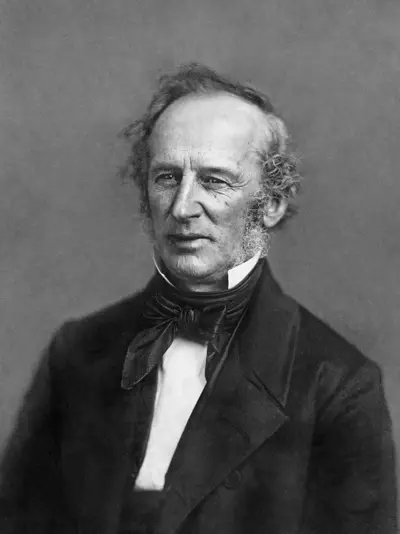
Cornelius Vanderbilt was an American business magnate who built his wealth in railroads and shipping. After working with his father's business, Vanderbilt worked his way into leadership positions in the inland water trade and invested in the rapidly growing railroad industry. Nicknamed "The Commodore", he is known for owning the New York Central Railroad. His biographer T. J. Stiles says, "He vastly improved and expanded the nation's transportation infrastructure, contributing to a transformation of the very geography of the United States. He embraced new technologies and new forms of business organization, and used them to compete....He helped to create the corporate economy that would define the United States into the 21st century."
