James Harrington Quotes
The power that can invade the liberty of conscience can usurp civil liberty; and where there is a power that can usurp civil liberty, there is no commonwealth.
James Harrington, 1611-1677, English Writer, Political Works
Sourced by: Eigen's Political and Historical Quotations

John Witherspoon, a Presbyterian minister with evangelical sympathies, was one of the signers of the Declaration of Independence.


James was a Catholic King and did not like Protestants but positively detested Puritans. He made good his and “harried them out of the land” much to the benefit of the American colonies to which they immigrated and the detriment of England. Many of the immigrants to America came for the religious freedom, but in the early days, no sooner did they arrive and become the majority, than they began to discriminate against other religions.


The Bank was privately owned. Jackson was a major opponent of the Bank. See his description {630650} .

Williams was the first theologian who not only advocated religious toleration but argued that Christianity demanded it and the separation of church and state.


We was asked to recant his “heretical” ideas and he would be freed. He was finally freed without recanting and when he established Pennsylvania there was freedom of conscience for all, not even common then in the American Colonies.


This quotation was used ten years later by Virginia which, in convention, passed a resolution objecting to the Alien & Sedition Acts. The drafter of the original resolution was James Madison.


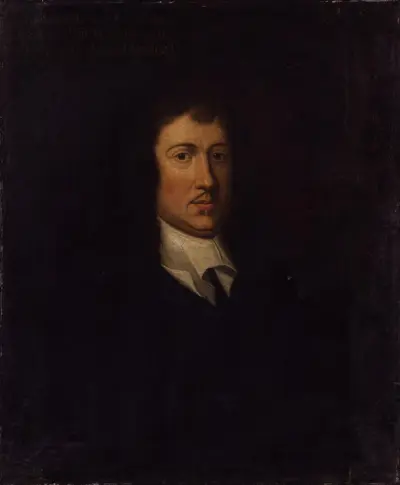
James Harrington (or Harington) was an English political theorist of classical republicanism. He is best known for his controversial publication The Commonwealth of Oceana (1656). This work was an exposition of an ideal constitution, a utopia, designed to facilitate the development of the English republic established after the regicide, the execution of Charles I in 1649.
