William Penn Quotes
My prison shall be my grave before I will budge a jot; for I owe my conscience to no mortal man.
We was asked to recant his “heretical” ideas and he would be freed. He was finally freed without recanting and when he established Pennsylvania there was freedom of conscience for all, not even common then in the American Colonies.
William Penn, 1644-1718, Founder of Pennsylvania, Statement in the Tower of London where he was imprisoned, ~ 1668
Sourced by: Eigen's Political and Historical Quotations


This is a particularly interesting historical quotation because it succinctly gives a history of the various horrors of religious strife in British history—a history that was very well known to the American Founding Fathers and the general American Colonial population. This history was the major driver behind the public insistence for the Bill of Rights and the 1st Amendment which erected a wall of separation between church and state with government never favoring or abetting any particular religion.


Both Puritans and Quakers were persecuted and physically abused in England by the Anglican Church. The Puritans as soon as they became dominant in part of the American colonies began persecuting Quakers. The Quakers who were the majority in the Pennsylvania colony, however were tolerant of other religions. This history was another of the many reasons the Founding Fathers wanted no established church. A “scorpion” was a type of whip that was particularly painful.


The fear of the Sikhs was that if the Punjab became a part of the new Muslim State of Pakistan, they would not be allowed to practice their religion and that the new Islamic state would discriminate against non-Muslims. They were successful in keeping the Punjab as a part of India, and turned out to have been right about the intolerance of the new Muslim state.

Hamilton never forgot the statement and saw Burr’s character for what it was sooner than most.


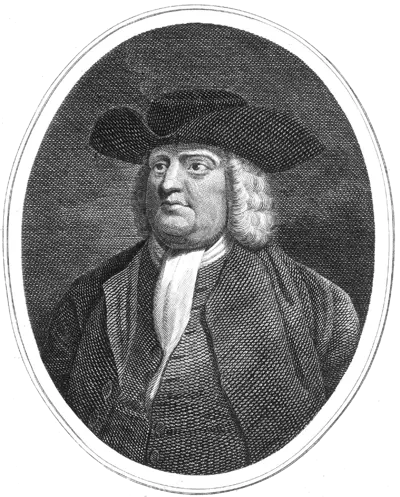
William Penn was an English writer and religious thinker belonging to the Religious Society of Friends (Quakers), and founder of the Province of Pennsylvania, a North American colony of England. He was an early advocate of democracy and religious freedom, notable for his good relations and successful treaties with the Lenape Native Americans. Under his direction, the city of Philadelphia was planned and developed. Philadelphia was planned out to be grid-like with its streets and be very easy to navigate, unlike London where Penn was from. The streets are named with numbers and tree names. He chose to use the names of trees for the cross streets because Pennsylvania means "Penn's Woods".
