Paul Tibbets Quotes
We’ve never fought a damn war anywhere in the world where they didn’t kill innocent people. If the newspapers would just cut out the shit: 'You’ve killed so many civilians.' That’s their tough luck for being there.
Bombing had reached the point where conventional bombing raids on industrial cities like Tokyo and Hamburg produced even more civilian casualties than did the atomic bomb at Hiroshima. Tibbets’ view, through the lens of hindsight, was developed by many of the Allied servicemen who had been forced into war by expansionist and militaristic nations like Japan and Germany both of which placed much of their war material manufacturing capability in the midst of their otherwise civilian cities. Both brutally violated the laws of war and committed atrocities many times over before the allies began retaliating. There are still some who believe that it was wrong to drop the atomic bomb on Japan. Some even feel that the mass bombing of Japanese and German cities in retaliation and in furtherance of the war effort was morally wrong. But at the time, the millions of casualties anticipated in the invasion of the Japanese mainland, persuaded virtually every American soldier and civilian that there was nothing wrong with use of the Atomic bomb, and many saw it as an absolute Godsend to prevent all the American and Japanese causalities that would have come otherwise. Many scholars remark on how it was virtually impossible to find any significant number of misgivings before or just after Hiroshima. Tibbet’s view was typical.
Paul W. Tibbets, Jr., Air Force General, Pilot of the Enola Gay, first aircraft to drop an atomic bomb, Quoted by Studs Terkel, 2002
Sourced by: Eigen's Political and Historical Quotations


The second atomic bomb had just been dropped.

On March 9-10, 1945, over three hundred B-29 Superfortresses, loaded with 2,000 tons of incendiary bombs flew over Tokyo bombing the city in waves for 6 hours. Over 250,000 buildings were destroyed and more people killed than would be in either Hiroshima or Nagasaki which were destroyed by atomic bombs. The fact that the Japanese would not surrender even after such complete destruction of their capital and largest industrial city, was used by American leaders in assessing whether to use the atomic bomb afterwards. There were many who believed that the atomic bomb would not be enough for motivate a Japanese surrender as Japanese culture prohibited surrender. Indeed, even after the 1st atomoc bomb, the Japanese did not surrender, and after the 2nd, the war council was split 3-3 and the Emperor historically broke the tie. Even the atomic bomb might not have worked. Later generations found this resistance to surrender hard to understand but Japanese culture was amazingly strong then.

The note was found in an abandoned Japanese camp on Bataan. There are some who believe that this note was a forgery. However, most think it genuine as it reflected one of the Japanese
“aces in the hole” to defend against an allied invasion of the Japanese mainland. It was one of the reasons that some American planners advocated use of the Atomic Bomb. Of course that was a real risk of using the bomb. The Japanese might be so angry and feel morally abused and kill the many allied prisoners they had. Many thought it was a lesser risk because it did not have the symbolic animus that foreigners occupying the Japanese homeland had. The quotation illustrates the amazing complexity that the American and allied leadership faced trying to end WWII in the Pacific.


The day before, Helms’ deputy testified about the high number of civilian casualties that American bombing of North Vietnam had caused.
Truman had been briefed on the number of Japanese who committed suicide rather than surrender—including civilians—in Saipan, Okinawa, Iwo Jima, and other locations where United States troops had invaded. He and his experts agreed that the Japanese would not surrender unless there was a new dramatic factor that was outside the usual thinking—the atomic bomb. He was proved right about the warning. Not only did the Japanese ignore it, but they did not even surrender after the nuclear devastation at Hiroshima. It took a second bomb dropped on Nagasaki to motivate the surrender. So even a demonstration with all those Japanese casualties did not cause the surrender until it was repeated.


Mahathir, in his moral assessment, fails to come to grips with the fact that the Coalition forces in their Afghan and Iraq activities attempt to kill and injure as few people as possible to accomplish their objective. The terrorists attempt to kill and injure as many people as possible. In the September 11 attack, the buildings could have been attacked late at night so there would be few casualties, and in Bali they could have bombed the facility after it had closed instead of waiting until there was the largest audience. And the terrorist bombs include nails, rat poison, and other additional material designed not to do more building damage, but to kill and maim more people which is their specific objective. Most wars have collateral damage and the parties are required to make a good faith attempt to minimize that. But the terrorists not only make no attempt, but make strong efforts to kill as many as possible. That is a huge moral and ethical distinction.

On March 9-10, 1945, over three hundred B-29 Superfortresses loaded with 2,000 tons of incendiary bombs flew over Tokyo bombing the city in waves for 6 hours. Over 250,000 buildings were destroyed and more people were killed than would be in either Hiroshima or Nagasaki which were destroyed by atomic bombs. See {615730} and {615733}. The technique called area bombing was then implemented on Japanese cities 66 more times. Stimson was seriously worried that there would be no large targets in Japan left on which the dramatic effect of the atomic bomb could be demonstrated. And without such a demonstration, there would not be a likely Japanese surrender as all the devastating conventional bombing had not persuaded the Japanese. A land invasion with perhaps millions of casualties might be required.

60,000 English men, women, and children had been killed by German terror bombing of London and other English cities. The policy had been to retaliate and bomb German population centers. Over 4 million British homes had been destroyed by the blitz and Churchill was becoming concerned that when the Allies would occupy Germany shortly, there would be no German housing left for the civilian population much less for the Allied occupying forces. Churchill’s Air Attaché persuaded him NOT to send the memorandum with it’s references to the terror bombing in retaliation. The memorandum was rewritten with the references to “terror” removed. The bombing of cities did stop as a result.


This has been true in just about every conflict. In WWII however, there were a highly disproportionate ration of atrocities with those of the axis forces dwarfing those of the U. S. and its allies. Further, after the war, those allied atrocities that did take place were published. In addition, one basic difference is in the policies of the fighting forces and their governments as opposed to individual actions by soldiers. In WWII, the allied atrocities were of the latter type, but the axis atrocities involved both.

At the time, surprising to most people now, the use of the atomic bomb was not an issue of controversy at all. There were no Congressman who questioned it, no newspapers which editorialized against the use of the bomb. There were not even any other counties which protested its use. The blessing of ending the war, even at the cost of less than 200,000 deaths seemed a clearly desirable tradeoff when compared with the many millions of deaths that would have occurred had the bomb not been used. As an example, the conventional bombing of Tokyo before the nuclear weapons were used killed as many Japanese as either Hiroshima or Nagasaki.
At Hamburg Harris organized a massive fire bombing of the German industrial city and the fire storm was so great that it sucked the oxygen out from huge sections of the city and thousands of people were roasted alive. Even with 100,000 Germans killed, Harris was convinced that it was a relatively humane way of waging a necessary war when compared to the classic artillery barrage followed by invading soldiers and street to street fighting.

Truman had just told Stalin about the new technology. Stalin had actually already known something about it as the result of Soviet espionage in the United States.

Although generally a right wing conservative, Clark today sounds like almost like an extreme leftist on the issue. At the time however, many thought that he had taken leave of his senses. He not only was completely contrary to bipartisan national policy but opposed by almost universal American public opinion. He is one of the very few significant American officials to oppose the war policies.


The British and American bombing of Germany had become so effective that most of the German industrial system was destroyed. However, early in the War, Germany had violated the Geneva Convention and was indiscriminately bombing London and other part of England. In addition the German Air Force had bombed Warsaw, and many other cities throughout Europe. The German’s had killed over 20 million Europeans. When the Allied bombing produced high collateral damage against civilians, some argued that even though German had deliberately used this tactic, the allies should stop the saturated bombing if there were to be high civilian collateral damage. Others argued that it was unfortunate but a military necessity. There were others like Brenen, who argued that killing German women and children was desirable and just.

The only soldier ever so honored
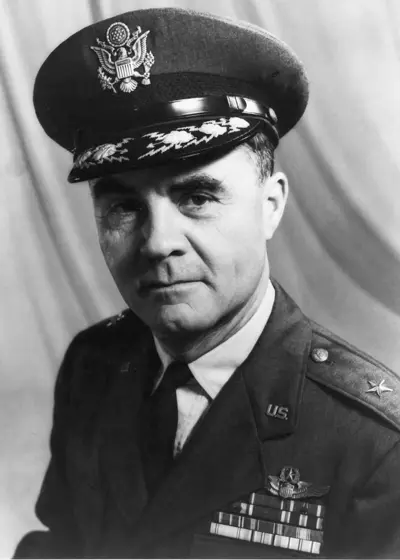
Paul Warfield Tibbets Jr. was a brigadier general in the United States Air Force. He is best known as the pilot who flew the B-29 Superfortress known as the Enola Gay (named after his mother) when it dropped Little Boy, the first of two atomic bombs used in warfare, on the Japanese city of Hiroshima.
