John Sergeant Wise Quotes
Wealthy men, too, like several of those in our neighborhood, had so many slaves that they were compelled to buy other plantations on which to employ them.
Wise, John Sergeant. The End of an Era. Houghton, Mifflin and Company, 1899, p. 77.

After the civil war there was a concerted effort to shape American opinion away from the notion that the Civil War has mainly about slavery which we now know was a false notion. Slavery was the only significant issue for both sides. This quotation is cited by many who argue that the prospect of the end of slavery was tantamount to economic confiscation and impoverishment for the slave owning minority and hence it drove them to rebellion. Also, Davis and others argue that the value of the slaves was so great that there was no possible economic way to compensate the slave owners for emancipation at fair market value which was why that “compromise” never went anywhere.


Many historians of higher education to not agree with Wilder’s overall generality. However, it was certainly the case that slavery was a major factor in generating the funds for some early universities in the North, but others were “hotbeds” of abolition from their very inception.
Most of us think the California was not a slave state, but in the early 1850s the California law (such as it was) allowed a slave owner to “sojourn” in California with his property that could include slaves. A number of Southern save owners took slaves to the California gold fields to do mining. There was a great deal of resentment on the part of the other miners and the free labor of the territory. In 1855, slavery in California was abolished.


He was the last Pope to hold temporal power. This defense of slavery was all the more surprising because America was fighting about the issue in the Civil War and nations like England had abolished slavery. 99 years later Vatican II altered Pius IX’s statement forever. See {612715}.


The perception of the necessity of slavery was evident very early in the South.
The Southeastern states were in a triple bind regarding slavery. The slave trade was ended so new slaves could not be imported. The existing slaves commanded much higher prices in the West and were sold to those destinations. Meanwhile, the European abject poverty provided a ready source of immigrants who would work for wages that were not much more than the cost of keeping and amortizing a slave. At the beginning of the Civil War, the death knell of Southeastern slavery had already been ringing.


The cotton industry and slavery were a very important part of the economy of Providence, RI. The Rhode Island cotton mills were supplied by Southern cotton produced by slaves and carried from the South on Rhode Island ships. Many of the southern slaves were kidnapped from Africa from Rhode Island slave trading ships. When the slave trade was made illegal, Brown was the first slave trader prosecuted. His brother, Moses Brown, a vehement abolitionist was one of the men who brought the prosecution.

Indian and Black slaves were outlawed very early in Connecticut, not on moral grounds of concern for the Indians and Blacks, but because of the negative effects on the white poor. Why would anyone pay the poor any more than the amortization costs of a slave? Therefore there was no way a poor white could make a living wage if slavery were to coexist.
He was also himself a ship owner in the slave trade and he was the brother of the leading Rhode Island abolitionist, Moses Brown. See {585793}. Brown became the first American, prosecuted in federal court for illegal slave trading –-- a prosecution brought, in part, by his own brother. He was, however, acquitted.


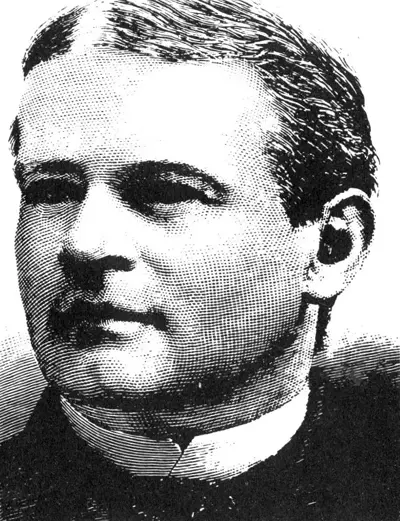
John Sergeant Wise was an American author, lawyer, and politician in Virginia. He was the son of Henry Alexander Wise, a Governor of Virginia, and Sarah Sergeant.
