Solomon Northup Quotes
I can speak of slavery only so far as it came under my own observation - only so far as I have known and experienced it in my own person.
Northup, Solomon. Twelve Years a Slave. Derby and Miller, 1853, p. 206.


Southern secession and the Civil War This is one of the major quotations with which historians rebut the revisionist view that the Civil War was about States’ Rights or other economic factors.


The “lords of the lash” were the Southern slave owners. The “lords of the loom” were the Northern mill owners. The Southern cotton, grown by cheap slave labor was sold to the Northern mill owners at very low prices. They in turn wove the cotton into cloth and sold it throughout the nation and to foreign countries. So, although there was strong Northern anti-slavery sentiment, the wealthy and politically powerful mill owners had a vested interest in maintaining slavery in the South.


Many historians of higher education to not agree with Wilder’s overall generality. However, it was certainly the case that slavery was a major factor in generating the funds for some early universities in the North, but others were “hotbeds” of abolition from their very inception.


Indian and Black slaves were outlawed very early in Connecticut, not on moral grounds of concern for the Indians and Blacks, but because of the negative effects on the white poor. Why would anyone pay the poor any more than the amortization costs of a slave? Therefore there was no way a poor white could make a living wage if slavery were to coexist.


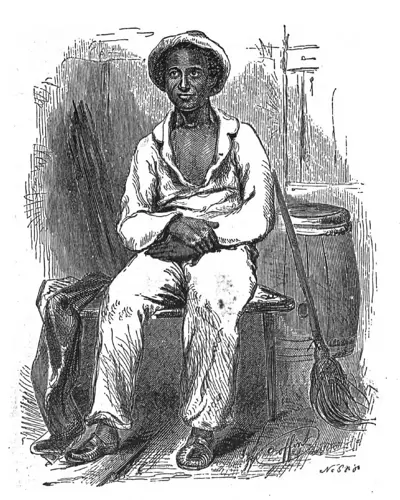
Solomon Northup was an American abolitionist and the primary author of the memoir Twelve Years a Slave. A free-born African American from New York, he was the son of a freed slave and a free woman of color. A farmer and a professional violinist, Northup had been a landowner in Hebron, New York. In 1841, he was offered a traveling musician's job and went to Washington, D.C. (where slavery was legal); there he was drugged, kidnapped, and sold as a slave. He was shipped to New Orleans, purchased by a planter, and held as a slave for 12 years in the Red River region of Louisiana, mostly in Avoyelles Parish. He remained a slave until he met a Canadian working on his plantation who helped get word to New York, where state law provided aid to free New York citizens who had been kidnapped and sold into slavery. His family and friends enlisted the aid of the Governor of New York, Washington Hunt, and Northup regained his freedom on January 3, 1853.
