Joseph Stalin Quotes
We secured peace for our country for one and a half years, as well as an opportunity of preparing our forces for defense if fascist Germany risked attacking our country in defiance of the pact. This was a definite gain to our country and a loss for fascist Germany.
Stalin, Joseph. On the Great Patriotic War of the Soviet Union. Foreign Languages Publishing House, 1946, p. 11.


One difficulty of diplomacy with many Islamic leaders is that the culture produces very aggressive rhetoric and very aggressive actions like Islamic terrorism. This quotation is often cited to demonstrate that it is the Iranians that had decided that America is it’s enemy; that America is to be humbled; and that their weapons development are targeted at America. This along with the most frequent Iranian slogan, “Death to America,” for many argues for preemptive military action or maintenance of a high state of readiness. Given statements like this from the leading soldier of the theocracy, there is little doubt that Iranian nuclear weapons would be a great danger to America. Therefore when Iran complains that America did not object to the fact that other nations have the nuclear bomb, they do not take their own rhetoric into account. No other nation with possible nuclear capability has made America its major military adversity and claims as an objective to humble the United States.


Prior to this the Japanese had not even considered what terms they might fight for if there were to be a peace negotiation. What the Japanese leadership apparently totally missed was the fact that President Roosevelt and all other American leaders throughout the war had promised that only unconditional surrender would be acceptable. This was reiterated in a Joint Declaration of the U. S. , China, and Great Britain. The Japanese thought this just propaganda and never took it seriously.
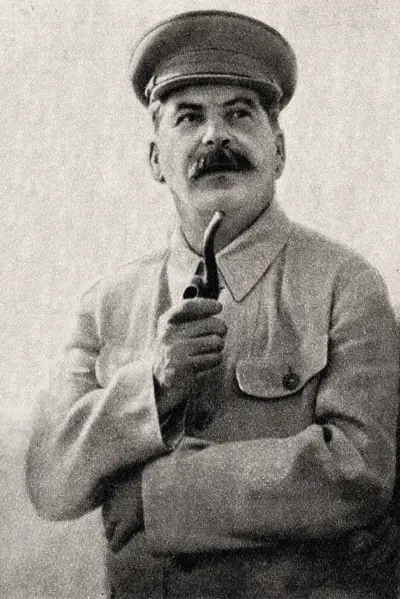
Joseph Vissarionovich Stalin was a Georgian revolutionary and the ruler of the Soviet Union from 1927 until 1953. He served as both General Secretary of the Communist Party of the Soviet Union (1922–1952) and Chairman of the Council of Ministers of the Soviet Union (1941–1953). Despite initially governing the country as part of a collective leadership, he ultimately consolidated power to become the Soviet Union's de facto dictator by the 1930s. A communist ideologically committed to the Leninist interpretation of Marxism, Stalin formalized these ideas as Marxism–Leninism while his own policies are known as Stalinism.
