Marcus Tullius Cicero Quotes
An army abroad is of little use unless there are prudent counsels at home. Parvi enim sunt foris arma, nisi est consilium domi.
Marcus Tullius Cicero, 106 BC-43 BC, Roman Statesman & Philosopher, De Officiis, 44 BC
Sourced by: Eigen's Political and Historical Quotations

On military or foreign policy matters his view was that presidents ought not to rule anything in or out so that he/she can keep all the options open and not reduce future flexibility.


At that time there were extensive meetings and discussions for the creation of what was to be the United Nations. The negative view of the United Nations or other international security organization is now and always has been held by a vocal minority in the United States.


Greek invaders were marching on Istanbul


This issue of who has the wisdom and competency to determine policy in matters of war has been a constant one in most societies. Even in the Iraq war of the early 21st century, the Congress and the President argued as to what competence the Congress had to determine policy, strategy and tactics.


One difficulty of diplomacy with many Islamic leaders is that the culture produces very aggressive rhetoric and very aggressive actions like Islamic terrorism. This quotation is often cited to demonstrate that it is the Iranians that had decided that America is it’s enemy; that America is to be humbled; and that their weapons development are targeted at America. This along with the most frequent Iranian slogan, “Death to America,” for many argues for preemptive military action or maintenance of a high state of readiness. Given statements like this from the leading soldier of the theocracy, there is little doubt that Iranian nuclear weapons would be a great danger to America. Therefore when Iran complains that America did not object to the fact that other nations have the nuclear bomb, they do not take their own rhetoric into account. No other nation with possible nuclear capability has made America its major military adversity and claims as an objective to humble the United States.

He was referring to the United States fighting against Al Qaeda and the Taliban in Afghanistan and Pakistan to keep Al Qaeda from attacking the United States easily.
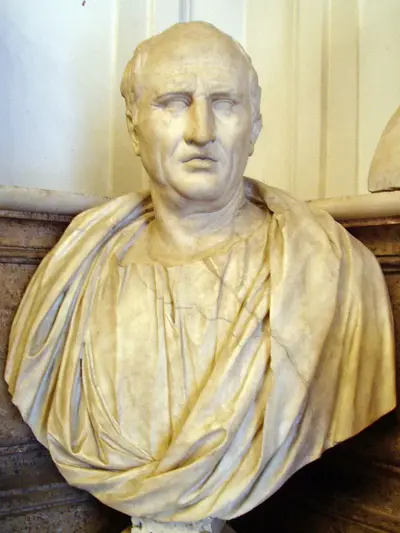
Marcus Tullius Cicero was a Roman statesman, orator, lawyer and philosopher, who served as consul in the year 63 BC. He came from a wealthy municipal family of the Roman equestrian order, and is considered one of Rome's greatest orators and prose stylists.
