Bernhard von Bulow Quotes
Without power, without a strong army and a strong navy, there can be no welfare for us .... The German nation will be either the hammer or the anvil.
Bernhard von Bulow, 1849-1929, German Chancellor, Reichstag Speech, 1899
Sourced by: Eigen's Political and Historical Quotations


America, England, Germany and France Many Japanese leaders predicted war between the Great Powers while America and its European Allies did not see the danger as clearly. Shortly after 1936, Hitler began the Second World War. Japan was indeed prepared. Hiranuma became one of the Japanese extremists and after WWII was convicted of war crimes and given a life sentence.

At that time there were extensive meetings and discussions for the creation of what was to be the United Nations. The negative view of the United Nations or other international security organization is now and always has been held by a vocal minority in the United States.


She and her husband, like many of the "America Firsters", believed that Hitler should be allowed to overrun Europe and Russia.


It is hard for us to envision that sophisticated and intelligent men like Sherman would actually see Communism as a danger of defeating capitalism. Our intelligence was poor and often exaggerated to justify military buildups and much of the leadership made statements like this and then many began to believe their own propaganda. Ironically, those who knew communism the best were more aware and realistic of the fatal flaws in not only communism in general but in the particular Soviet repressive version of communism. It would take almost 50 years, but the Soviet Union collapsed revealing its weaknesses for all to see.

This was written when the United States was not a dominant military power. At the beginning of the 20th century, the U. S. had the same size military as Argentina. It was France, German, Turkey and England who had the military superiority and it was they who tended to find excuses for war. After WWII, the U. S. was dominant and was involved with a number of wars and military incursions, often with nations that had not attacked the U.S. Korns’ principle was most dramatic when the George W. Bush administration invaded Iraq on the excuse that the Iraqis were developing weapons of mass destructions and then might attack the United States. After the successful invasion, the excuse was shown to be hollow as there were no signs of sophisticated weapons development.


Hobson, like Mark Twain in America, was a major critic of imperialism.


This was an official publication of the U. S. Army. The First World War had very little affect on future military preparedness At that time conservatives in Congress were very isolationist and military preparedness was not a high priority or even a significant political issue. The Democrats then were more supportive of military spending than the Republicans. It took World War II, for which America was very unprepared, to produce a change in public and political opinion regarding military preparedness.
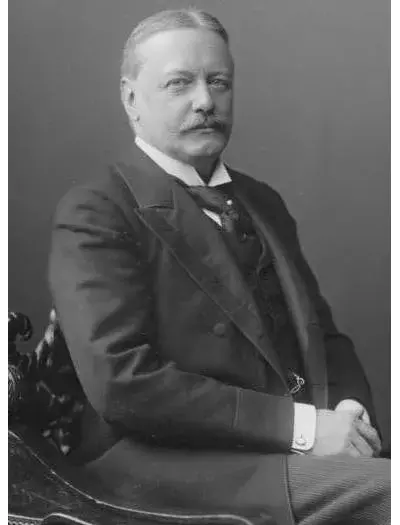
Bernhard Heinrich Karl Martin von Bülow, created Fürst von Bülow in 1905, was a German statesman who served as Foreign Minister for three years and then as Chancellor of the German Empire from 1900 to 1909. A fervent supporter of Weltpolitik, Bülow single-mindedly devoted his chancellorship to making Germany a leading power on the world stage. Despite presiding over sustained economic growth and technological advancement within his country, his government's foreign policy did much to antagonize the international community and significantly contributed to the outbreak of the First World War.
