Burgess Owens Quotes
We read of the courageous march south to battle the Confederate Army by the all-black 54th Massachusetts Volunteer Infantry. Unlike their white counterparts, they understood from the beginning that they would be offered no quarter if captured alive.
Owens, Burgess. Liberalism or How to Turn Good Men into Whiners, Weenies and Wimps. Post Hill Press, 2016.

Although escaped slaves could not fight for the North, they could be very useful on road building and other military engineering projects needing labor. Every time a slave escaped, it diminished the military engineering labor of the Confederates by one but added to that of the Union. Pinkerton and others however engaged many escaped slaves who volunteered for an incredibly dangerous mission. They returned back to the Southern lines into the slave work gangs, and organized slave escapes of groups of Blacks. In addition, many of them, by observing and overhearing the Confederate soldiers gained information regarding supply and troop levels and movements, and this they brought back to the Union officers. Those that were caught were executed as spies. Escaped slaves were espionage and covert operations agents before they were allowed to be soldiers.

This is an important quotation because it helps to dispel a myth that the Civil War was not about slavery. That was the reason that the rebelling states gave for secession, but apologists for the Confederacy have claimed that the average soldier on both sides did not care about slavery. (Two thirds of the Southern Soldiers came from families that did not own slaves; nonetheless it was clear that the main motivation of the Confederate Soldier was to protect the institution of slavery, while that of the Union soldiers was to destroy slavery.) Professor Manning found this in her book: What This Cruel War Was Over: Soldiers, Slavery, and the Civil War.


This Civil War recruiting poster was described by the Free Library of Philadelphia as “Civil War recruitment print targeting African Americans by evoking the freedoms granted by the Emancipation Proclamation. Depicts a montage of symbolic scenes centered around an African American Union soldier triumphantly holding up a sword and an American flag with the banner "Freedom to the Slave." He stands near broken shackles upon a tri-color flag adorned with a coiled snake. The flag is tugged upon by one of three joyous slaves freed by an African American soldier. Other scenes depict an African American man reading a newspaper on a rocking chair near a plow and child, African American children entering a "Public School" near a church, and a regiment of "U.S. Colored Troops" marching across a battlefield strewn with dead bodies.”
This is one of the most eloquent writings on the racial discrimination issue in American History. The young man who wrote it was a free Black born and educated in Troy, New York who became a seaman in New Bedford. He enlisted in the famous Massachusetts 54th Black Regiment. He also sent bi-weekly news dispatches to The New Bedford Mercury. In the midst of the assault on Fort Wagner in Charleston Harbor on July 18, 1863, and in the battle of Oustlee, Florida, on February 20, 1864. In the latter battle, he was wounded and captured. He was murdered by the inhuman conditions in the infamous Confederate prison camp at Andersonville, GA. He was only 27 years old.

This was the same man who as a Senator only 4 years before threatened the North that the South was economically and militarily invincible.


At this point, there had hardly been any fighting and no outrages or war crimes were yet committed by either side. These would come later—more on the Confederate side as they did not want to take the limited resources they had from their troops to fulfil abstract obligations to prisoners of war or to civilians. A few deliberately chose to use terror tactics. The Union troops also at various points in the war got out of hand and looted personal property of civilians. But at this point, this proclamation was just lies and propaganda.


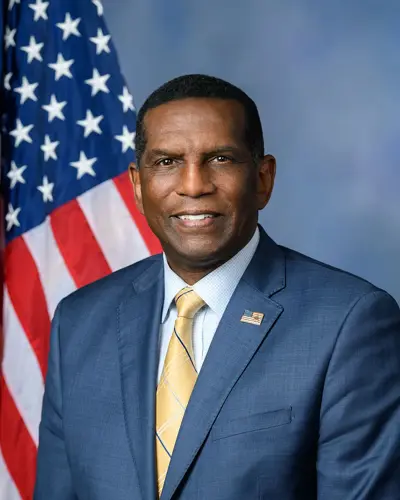
Clarence Burgess Owens is an American politician, non-profit executive and former professional football player serving as the U.S. Representative for Utah's 4th congressional district since 2021. He played safety for 10 seasons in the NFL for the New York Jets and the Oakland Raiders, winning a championship with the Raiders in Super Bowl XV in 1980. Since leaving the NFL, Owens has founded several businesses and is the CEO of a nonprofit dedicated to helping troubled and incarcerated youth. A Republican, Owens narrowly defeated incumbent Democrat Ben McAdams in the 2020 election. Owens, along with Byron Donalds, is one of two black Republicans in the House of Representatives.
