James Henry Hammond Quotes
These are terrible times. All our young in the Armies, not [any] men left to suppress a Negro insurrection …. As yet I have not sold a lock of Cotton
This was the same man who as a Senator only 4 years before threatened the North that the South was economically and militarily invincible.
James H. Hammond, 1807-1864, U. S. Congressman & Senator (Democrat, SC), Diary Entry May 12, 1862
Sourced by: Eigen's Political and Historical Quotations

Although escaped slaves could not fight for the North, they could be very useful on road building and other military engineering projects needing labor. Every time a slave escaped, it diminished the military engineering labor of the Confederates by one but added to that of the Union. Pinkerton and others however engaged many escaped slaves who volunteered for an incredibly dangerous mission. They returned back to the Southern lines into the slave work gangs, and organized slave escapes of groups of Blacks. In addition, many of them, by observing and overhearing the Confederate soldiers gained information regarding supply and troop levels and movements, and this they brought back to the Union officers. Those that were caught were executed as spies. Escaped slaves were espionage and covert operations agents before they were allowed to be soldiers.

He stated that he had a vision and made these two prophesies that indeed came true. The first was the South Carolina secession starting the Civil War. The second, when the North used former slaves as soldiers who fought their old masters.

There indeed were although the Southerners tended to exaggerate the numbers. However, the more slavery was debated, the more many of the abolitionists came to believe that insurrection and slave rebellion was not only morally justified but was the only recourse that was left by the racist intransigence of the Southern slave holders and politicians.

Essentially, the case of moral hazard was made against paying the slave owners. Lincoln took a pragmatic approach. However, not only was Northern opposition too strong for this proposal, but the Southern slave holders would never agree to selling their slaves. What Lincoln and most “pragmatic” Northerners did not realize is that even if the slave owners would get a fair market price for the slaves, they would be left with land and no way to work it. Their families would have no servants. They might have to work themselves like Northern farmers did, and their entire standard and style of living would be destroyed. Their sons were not well educated as many Northern young men were and were brought up to be gentlemen, politicians, and occasional soldiers—not work with their hands. They could not compete. And the slaveholders were right as the whole history of Reconstruction and backwardness demonstrated for more than 100 years.

After the civil war there was a concerted effort to shape American opinion away from the notion that the Civil War has mainly about slavery which we now know was a false notion. Slavery was the only significant issue for both sides. This quotation is cited by many who argue that the prospect of the end of slavery was tantamount to economic confiscation and impoverishment for the slave owning minority and hence it drove them to rebellion. Also, Davis and others argue that the value of the slaves was so great that there was no possible economic way to compensate the slave owners for emancipation at fair market value which was why that “compromise” never went anywhere.
He did at this time field 40,000 Negro military laborers.

This Civil War recruiting poster was described by the Free Library of Philadelphia as “Civil War recruitment print targeting African Americans by evoking the freedoms granted by the Emancipation Proclamation. Depicts a montage of symbolic scenes centered around an African American Union soldier triumphantly holding up a sword and an American flag with the banner "Freedom to the Slave." He stands near broken shackles upon a tri-color flag adorned with a coiled snake. The flag is tugged upon by one of three joyous slaves freed by an African American soldier. Other scenes depict an African American man reading a newspaper on a rocking chair near a plow and child, African American children entering a "Public School" near a church, and a regiment of "U.S. Colored Troops" marching across a battlefield strewn with dead bodies.”
This is an important quotation because it helps to dispel a myth that the Civil War was not about slavery. That was the reason that the rebelling states gave for secession, but apologists for the Confederacy have claimed that the average soldier on both sides did not care about slavery. (Two thirds of the Southern Soldiers came from families that did not own slaves; nonetheless it was clear that the main motivation of the Confederate Soldier was to protect the institution of slavery, while that of the Union soldiers was to destroy slavery.) Professor Manning found this in her book: What This Cruel War Was Over: Soldiers, Slavery, and the Civil War.


At this point, there had hardly been any fighting and no outrages or war crimes were yet committed by either side. These would come later—more on the Confederate side as they did not want to take the limited resources they had from their troops to fulfil abstract obligations to prisoners of war or to civilians. A few deliberately chose to use terror tactics. The Union troops also at various points in the war got out of hand and looted personal property of civilians. But at this point, this proclamation was just lies and propaganda.

There was little thought of emancipating slaves or their value to the South by the senior officers of the Union Army at the beginning of the war. The Secretary of War changed that. See {629183}for a typical Union General’s view at the beginning of the war.

Much of the South was so insular that people knew nothing about the notion of abolition and just assumed that no one would ever consider freeing the slaves. Many never knew that it was the South that first fired on the Union troops and flag. If the North won the war, the assumption was that Northerners would then own the plantations and the valuable slaves. In reality, while all slaves were emancipated in the South, very few plantations and farms were confiscated from their Southern owners by Northerners despite the fact that there was political pressure in the North to confiscate the land of all rebels who had committed treason and use the value to repay the Union bonds and care for the wounded Union veterans and the widows of dead Union Soldiers. Eggleston was an accomplished writer who had served in the Confederate army of the Civil War. 20 year after the war he wrote a series of articles for the prestigious Northern Atlantic Monthly trying to convey the war from the Southerner’s point of view.


Historically, this quotation shows the desperate condition of the 1863 food supply in the Confederacy. The most profitable crops were cotton and tobacco. However, Davis and other Southern leaders had to urge patriotic Southerners to abandon those crops in favor of foodstuffs and fodder for the military and their horses. Some did but many did not.

Darwin was then a very young man, who had personal witnessed the slavery in South America and the Caribbean when he was on his famous expedition on HMS Beagle. See {630961} & {630962}. He was so disgusted with slavery that he hoped there would be armed slave revolutions and takeovers as had occurred in Haiti. Many of the English upper classes were radical when it came to slavery.

Marx followed the American Civil War very closely. The freeing of the slaves caused an immediate social, moral and economic revolution, the results of which we live with today.

When the Confederate Government realized that the Union was planning to arm escaped slaves and induct them into the Union Army, they quickly passed a law that declared any escaped slave who joined the Union Army or wore its uniform was guilty of Treason and would be executed. Most Union Generals one way or another got word to the Confederate Officers that they had better treat all Negro Union Soldiers as prisoners of war. Even President Lincoln warned the South. Butler, however, had a large number of Negro troops in his area and had heard threats of some of the Southerners to execute Black prisoners of war. He had a way of making things very clear, and he was able to prevent murder of any of his Negro troops despite the Treason law.
Lincoln and the Union leaders were still hopeful of ending the rebellion and getting things back to a pre-war footing economically. At this point they were trying to preserve components of the Southern Economy at no small cost. As that hope was shown to be futile, the Total War strategy of Grant and Sherman prevailed to the satisfaction of men like Opdycke. That actually ended the war quickly, but the Southern Economy was devastated in the process.

And so they were. However, Calhoun had already concluded which alternatives the South would take. See {635930}
loyalty oath to the King of England His “Ethiopian Regiment” was the first Black military regiment in North America. Soon after, Rhode Island organized a Black military unit—see {613949}.

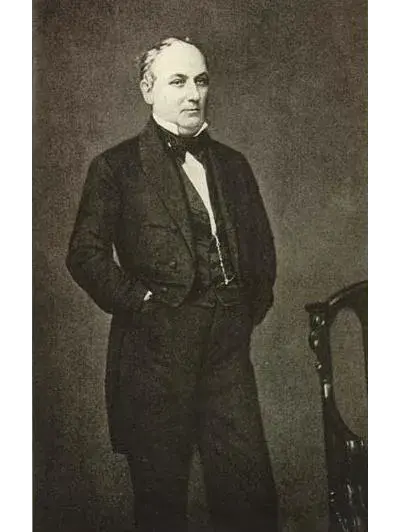
James Henry Hammond was an attorney, politician, and planter from South Carolina. He served as a United States Representative from 1835–36, the 60th Governor of South Carolina from 1842–44, and United States Senator from 1857 to 1860. He was considered one of the major spokesmen in favor of slavery in the years before the American Civil War.
